No products in the cart.
No products in the cart.

No products in the cart.
No products in the cart.
No products in the cart.
No products in the cart.
No products in the cart.
No products in the cart.
No products in the cart.
No products in the cart.
Monitor your blood oxygen saturation (SpO₂) and pulse rate with confidence. Explore reliable pulse oximeters designed for everyday home use, professional settings, and informed health monitoring.
Whether you’re keeping track of your wellness at home, monitoring recovery, supporting a loved one, or equipping a healthcare practice, a pulse oximeter is a simple way to check blood oxygen saturation (SpO₂) and pulse rate in seconds. Dr.Brightwell brings together dependable pulse oximeters designed for ease of use, consistent readings, and everyday convenience for both home users and healthcare professionals.
Every user has different monitoring needs. Whether you’re looking for a dependable fingertip device for occasional home checks or a pulse oximeter suitable for regular use in clinics and healthcare environments, Dr.Brightwell’s range is designed to combine ease of use with reliable performance. Each model focuses on clear readings, user comfort, and everyday practicality.
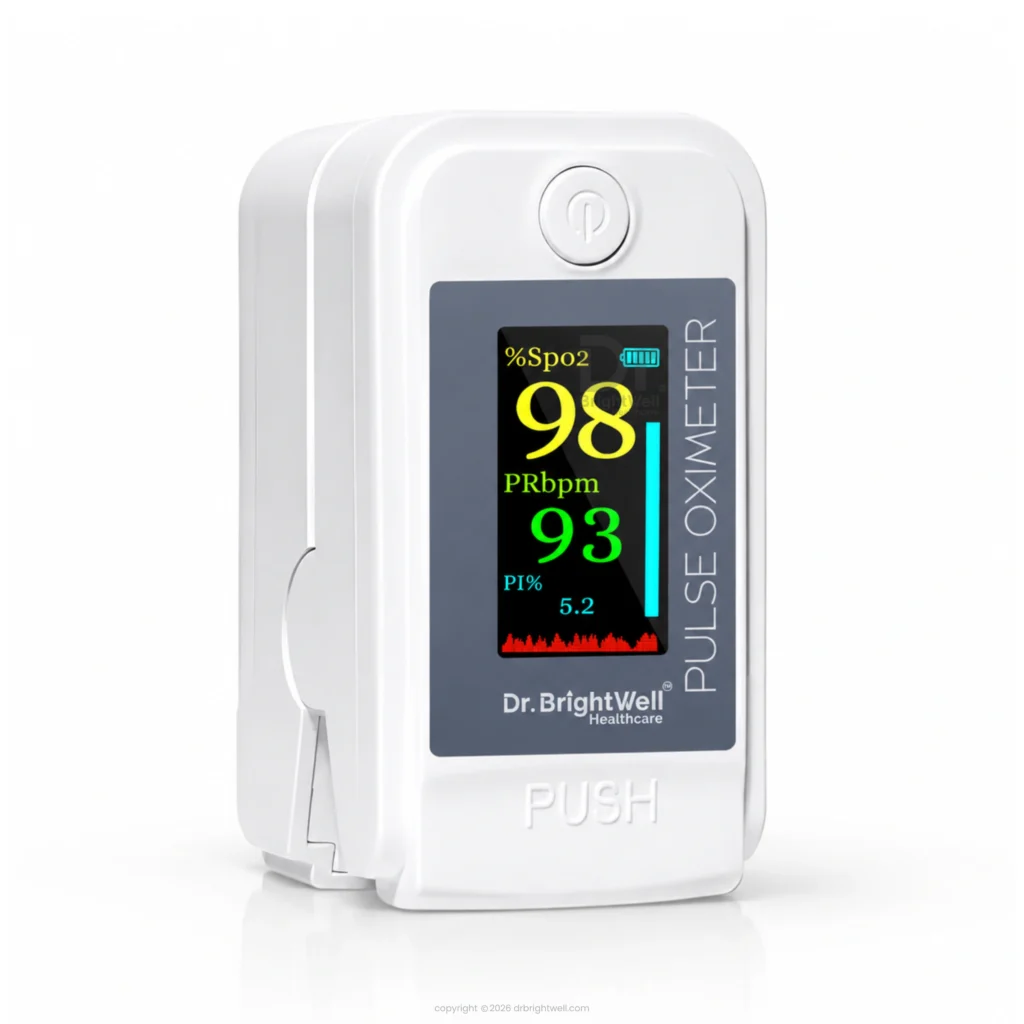
Built for regular monitoring across home and professional settings, OxiCheck combines portability with dependable performance. Its compact design makes it a practical choice for caregivers, healthcare workers, and users who need consistent access to oxygen saturation and pulse rate readings.
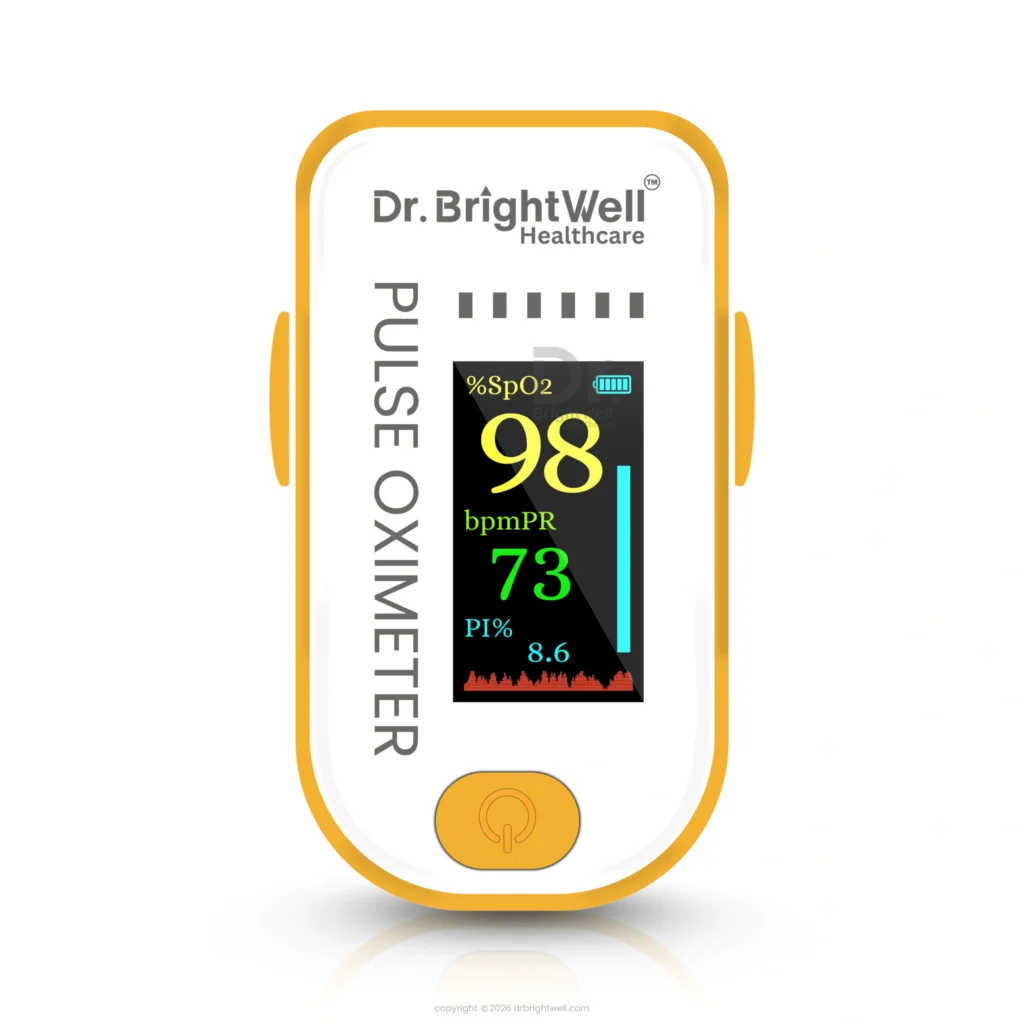
Designed for users who value enhanced visibility and a user-friendly experience. OxiBright pairs a clear display with fast measurements, making it suitable for both home environments and healthcare professionals who need quick spot checks
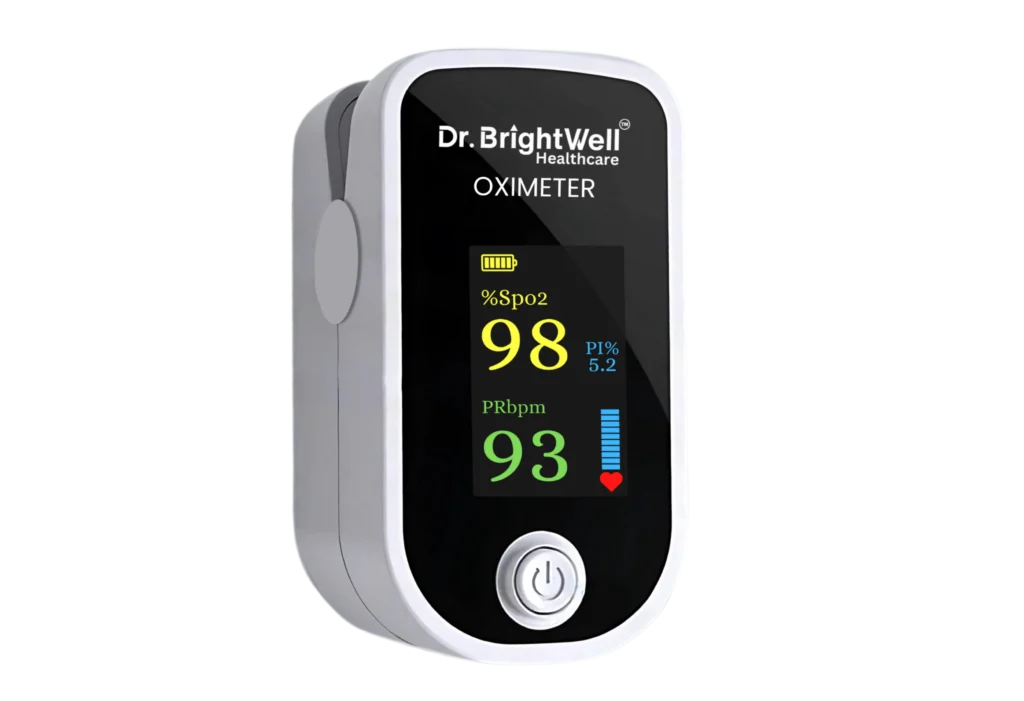
A dependable fingertip pulse oximeter for everyday home monitoring. OxiPrime is well suited for families, older adults, fitness enthusiasts, and anyone who wants a quick way to monitor SpO₂ and pulse rate.
Our healthcare products are developed with a focus on reliability, usability, and everyday convenience for Indian households.
Products developed for practical daily healthcare monitoring.
Dedicated assistance for product-related guidance.
Simple operation suitable for first-time users and seniors.
Accessible healthcare solutions across India.
Added confidence through product warranty support.
Growing commitment to affordable healthcare technology.
A pulse oximeter is a small, non-invasive medical device that measures two important health indicators: blood oxygen saturation (SpO₂) and pulse rate. By simply placing the device on your fingertip, it estimates how much oxygen your red blood cells are carrying and displays the result within a few seconds.
Blood oxygen saturation is expressed as a percentage. In healthy adults at sea level, a typical SpO₂ reading is generally between 95% and 100%, though individual circumstances such as age, altitude, and certain medical conditions can influence readings. Pulse rate, measured in beats per minute (BPM), helps indicate how fast the heart is beating.
Pulse oximeters have become a common part of home healthcare because they are easy to use and do not require blood samples or invasive procedures. Families often keep one at home alongside a thermometer and blood pressure monitor as part of a basic health monitoring kit.
Healthcare professionals also rely on pulse oximeters in clinics, hospitals, ambulances, and community care settings to monitor patients during routine assessments and treatment.
A pulse oximeter works by passing small beams of red and infrared light through your fingertip. Oxygen-rich blood and oxygen-poor blood absorb these wavelengths differently.
The device analyses the light that passes through your finger and estimates:
The process is completely painless and typically takes less than a minute.
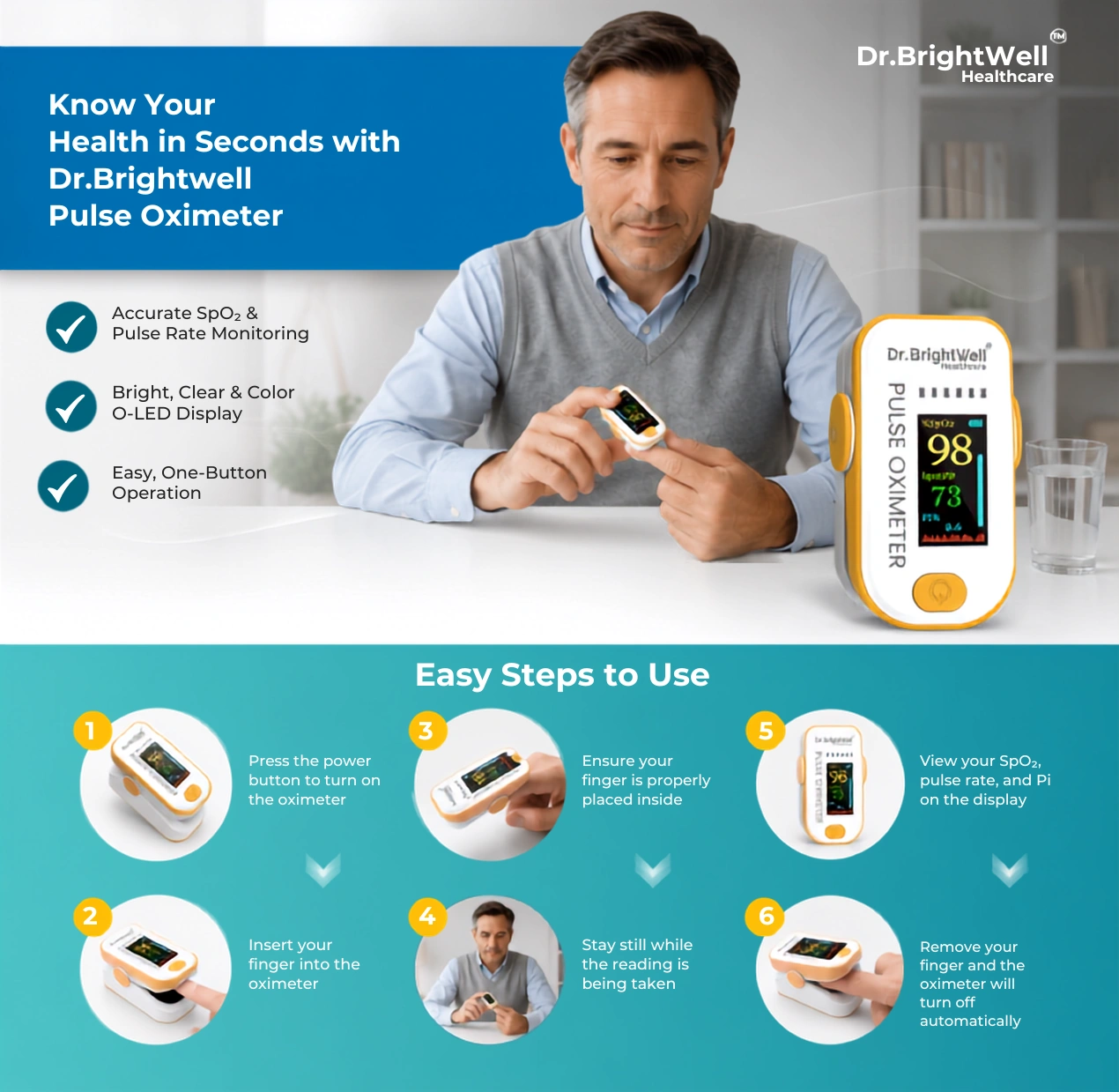
Insert your index or middle finger fully into the pulse oximeter. Your hand should be relaxed and supported for the most stable reading.
Tiny sensors inside the device shine harmless red and infrared light through your fingertip while detecting changes caused by blood flowing through your arteries.
Using the light absorption data, the pulse oximeter estimates the percentage of oxygen carried by your blood and measures your pulse rate at the same time.
Within a few seconds, the display shows:
Some models may also display a pulse waveform or pulse strength indicator, which can help users confirm a stable reading.
Many individuals exploring respiratory care solutions wonder whether purchasing a nebulizer for home use is practical. Today, home nebulizers are widely available and are commonly used in households supporting respiratory wellness routines.
A pulse oximeter is used to measure blood oxygen saturation (SpO₂) and pulse rate. It helps users understand how well oxygen is being carried through the bloodstream without requiring a blood sample.
No. A pulse oximeter cannot measure blood pressure.
A single reading of 92% does not automatically indicate an emergency, but it should not be ignored especially if accompanied by symptoms such as difficulty breathing, bluish lips, chest discomfort, or unusual fatigue. If your readings remain low or continue to fall, contact a healthcare professional immediately.
For most healthy adults at sea level, an SpO₂ reading between 95% and 100% is generally considered normal. Pulse rate varies depending on age, fitness level, medications, and activity, but a resting heart rate between 60 and 100 beats per minute (BPM) is common for adults.
Pulse oximeters are generally reliable for spot-checking oxygen saturation in everyday settings. Most are designed to estimate oxygen levels within a clinically acceptable accuracy range when used under normal conditions.
A quality pulse oximeter can provide dependable readings when it is used correctly. Accuracy depends on several factors, including proper finger placement, warm hands, minimal movement, and following the manufacturer’s instructions.
Healthcare-focused brands such as Dr.Brightwell place emphasis on quality testing, reliable sensors, and user-friendly designs to support consistent everyday monitoring.
Not every pulse oximeter is identical. Choosing the right one depends on how often you’ll use it, who will be using it, and the environment in which it will be used. Looking beyond price alone can help you select a device that matches your needs.
Choose a pulse oximeter designed to deliver stable and repeatable readings when used correctly. Read the manufacturer’s specifications and instructions carefully.
A bright, high-contrast screen with large numbers makes readings easier to view, particularly for older adults and in low-light conditions.
The device should fit comfortably without excessive pressure while maintaining good sensor contact.
Most users appreciate devices that display readings within a few seconds without sacrificing consistency.
Consider battery type, expected battery life, and whether the device includes an automatic power-off function to help extend usage.
Choosing a healthcare-focused brand with responsive customer support, product information, and a dependable range can give users greater confidence in their purchase. Dr.Brightwell’s pulse oximeter range is designed to support both home users and healthcare professionals with practical, easy-to-use monitoring solutions
A pulse oximeter gives you a quick snapshot of your oxygen saturation and pulse rate without needing a clinic visit. While it should not replace professional medical advice, it can be a useful tool for routine health monitoring and understanding changes in your condition over time.
Check your SpO₂ level in seconds whenever you need reassurance or want to monitor changes.
Most fingertip pulse oximeters require only one button and can be operated comfortably by users of different age groups.
No needles, blood samples, or complicated setup are required.
Its compact size makes it easy to carry while travelling, at work, or during outdoor activities.
Many families include a pulse oximeter as part of their home healthcare essentials for routine monitoring.
People recovering from respiratory illnesses or certain medical procedures may use a pulse oximeter as advised by their healthcare provider to monitor oxygen levels.
Athletes, trekkers, and fitness enthusiasts sometimes monitor oxygen saturation and pulse rate during training or at higher altitudes.
Caregivers looking after older adults or individuals with ongoing health conditions can use a pulse oximeter to track readings between medical appointments, following a healthcare professional’s guidance.
Most devices display results within 5–10 seconds, making routine monitoring quick and convenient.




Each unit goes through strict quality checks to ensure safety, accuracy, and durability. You’re not just buying a machine/ Nebulizer for home use—you’re bringing home peace of mind.
See All Our Certifications.
Following proper guide helps ensure more consistent results.
Discover how physical activity can influence pulse oximeter readings and why measurements taken during rest are often more consistent. This research examines the accuracy of pulse oximeters across different activity levels and highlights practical considerations for obtaining reliable SpO₂ measurements.
Learn how reduced blood circulation can affect pulse oximeter performance. This systematic review evaluates the accuracy of pulse oximeters in patients with poor peripheral perfusion and discusses factors that may influence oxygen saturation readings in clinical and home settings.