Wheelchair for Toilet: Which Type Should You Buy?
The right choice depends mainly on
whether the person can transfer, whether they need wheelchair mobility, and
how far they need to travel to the toilet.
| Your situation | Best option |
|---|
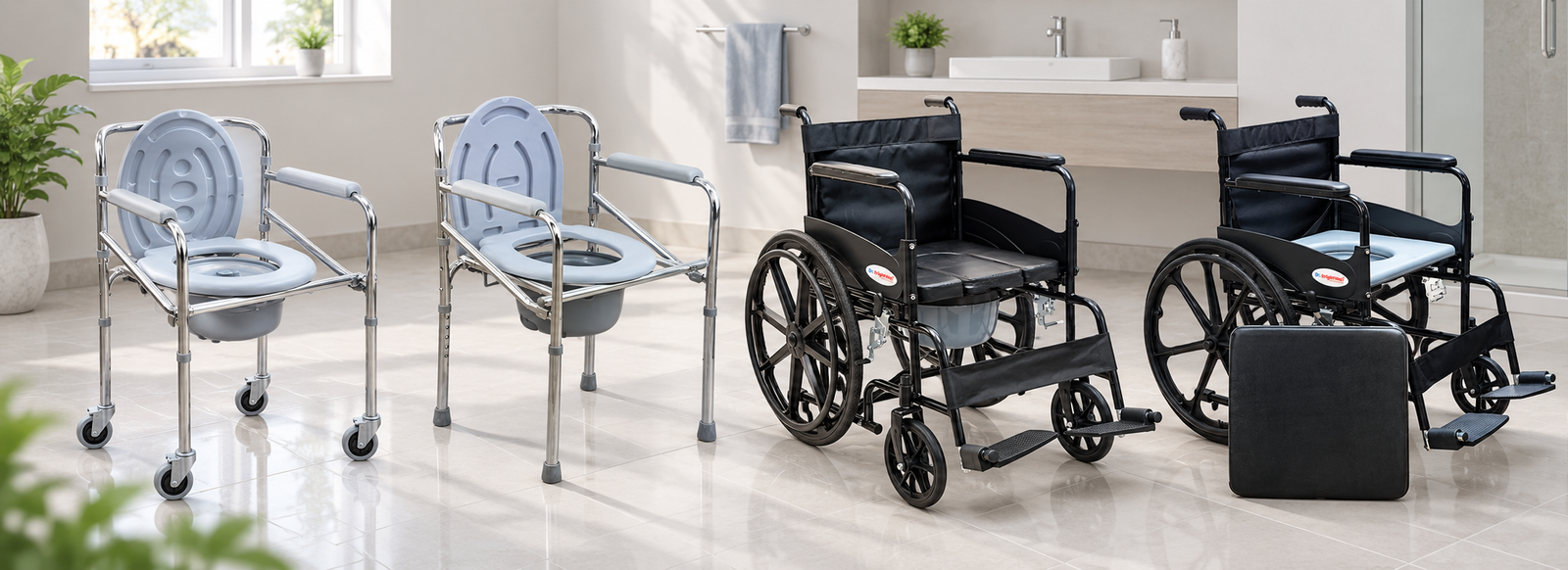
| Can stand/walk a little but toilet is difficult to reach | Commode chair |
| Needs the commode moved between bed and bathroom | Commode with wheels |
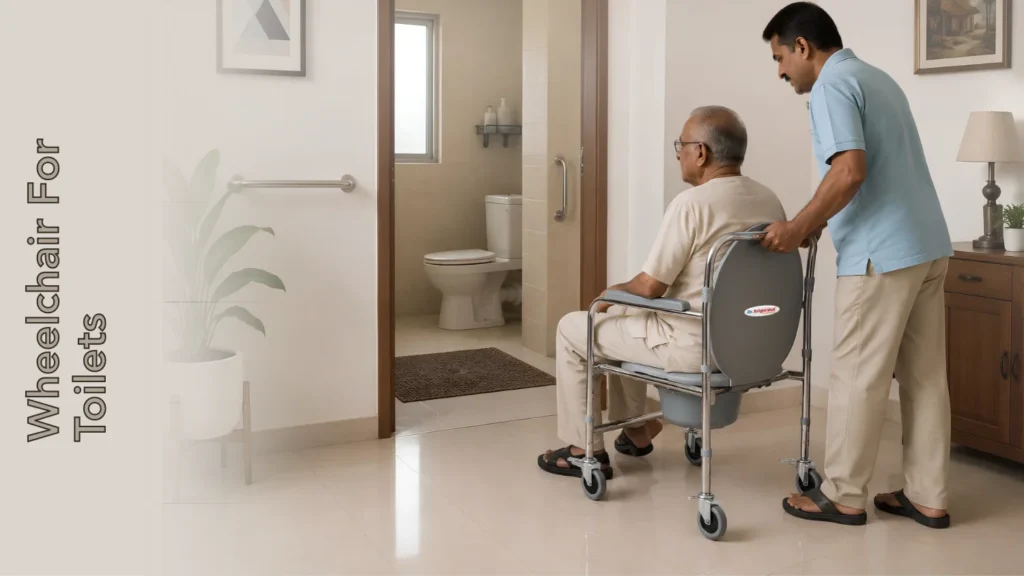
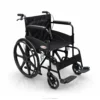
| Uses a wheelchair and needs toileting without a normal toilet transfer | Commode wheelchair U-Cut / wheelchair with commode |
| Main problem is getting up from the wheelchair | Seat-lift wheelchair |
| Needs both mobility + toileting in one chair | Commode wheelchair U-Cut |
Important: A seat-lift wheelchair helps with positioning and transfers, but it is
not
automatically a toilet chair. The specific model must be designed and tested for the intended toilet
setup.

1. Commode Chair
A
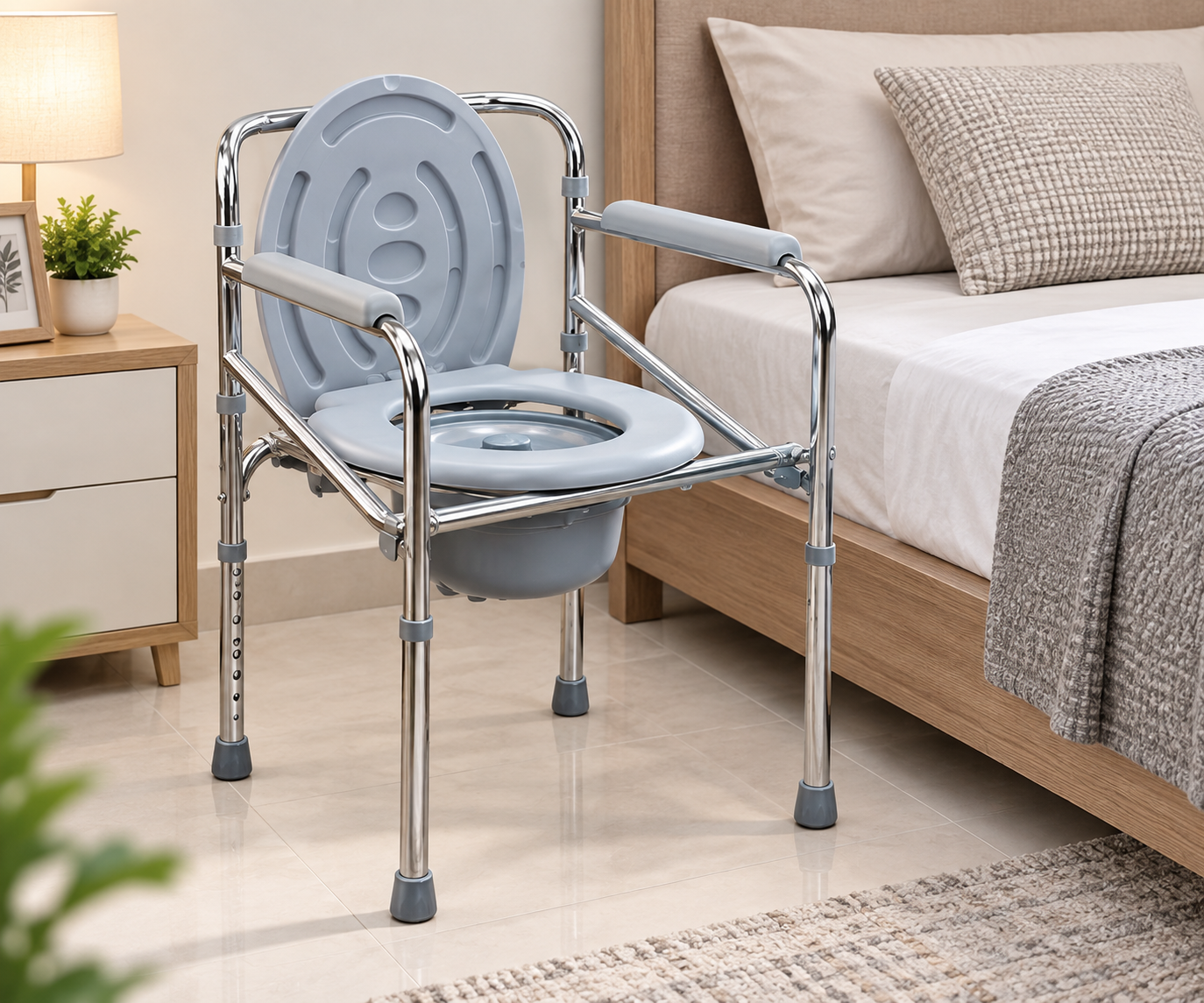
commode chair is a portable toilet seat with a removable container. It is useful when walking to the
bathroom is difficult or the bathroom is too far away.
| Best for | Drawbacks |
|---|
| Limited walking ability | Usually needs the user to stand or transfer onto it |
| Bedroom toileting | Not designed for wheelchair-level mobility |
| Short-term recovery | Someone may need to empty and clean the pan |
| People who can still transfer onto the chair | — |

2. Commode With Wheels
A
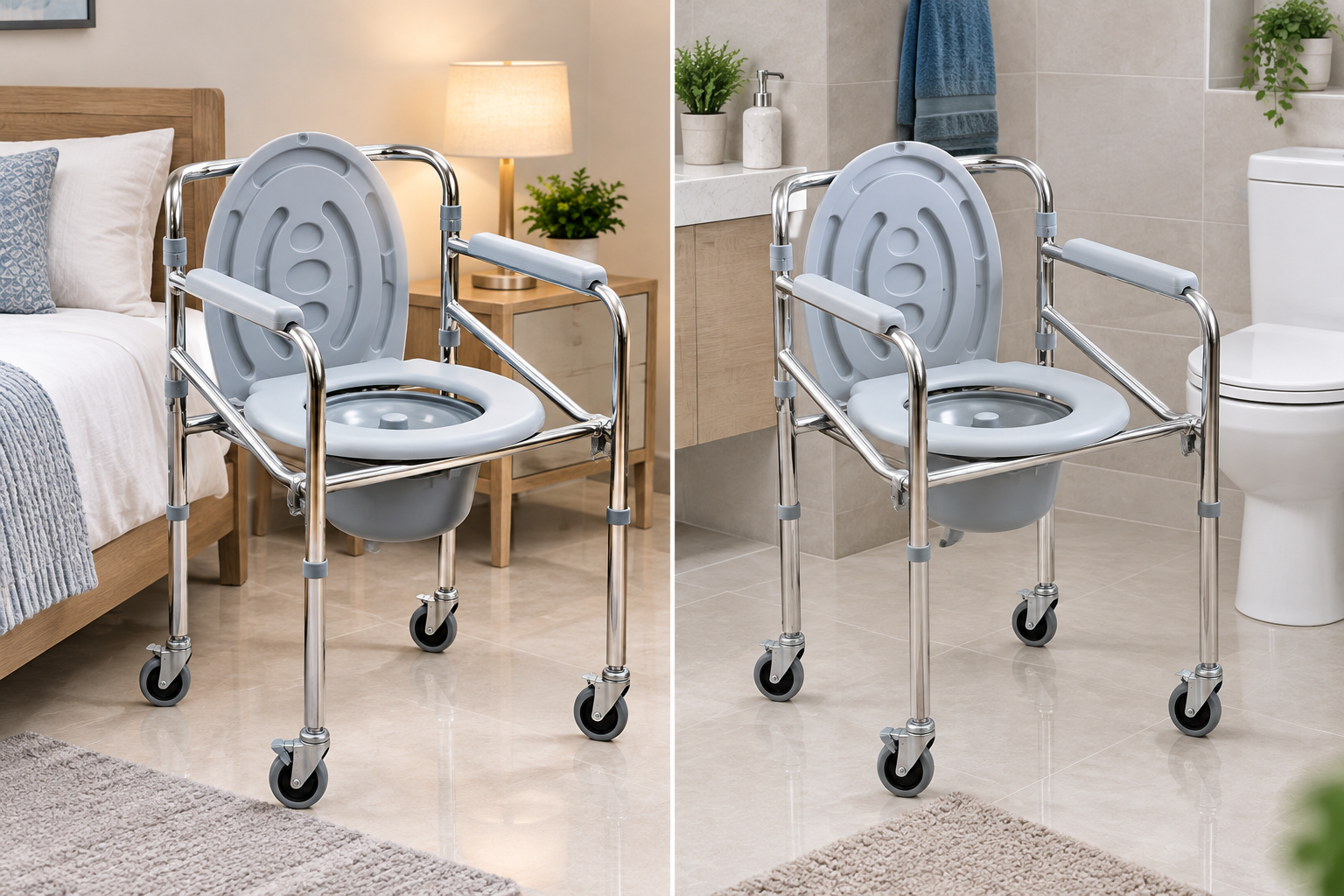
wheeled commode adds casters so a caregiver can move the seated person more easily. Some models can
be positioned
over a standard toilet, while others use a removable commode bucket.
| Best for | Drawbacks |
|---|
| Person has difficulty walking but can sit safely | Many are primarily attendant-propelled |
| Caregiver-assisted toileting | Larger turning space may be required |
| Moving between bedroom and bathroom | Wheels do not mean the chair is suitable for independent self-propulsion |
| Homes where a stationary commode is inconvenient | — |

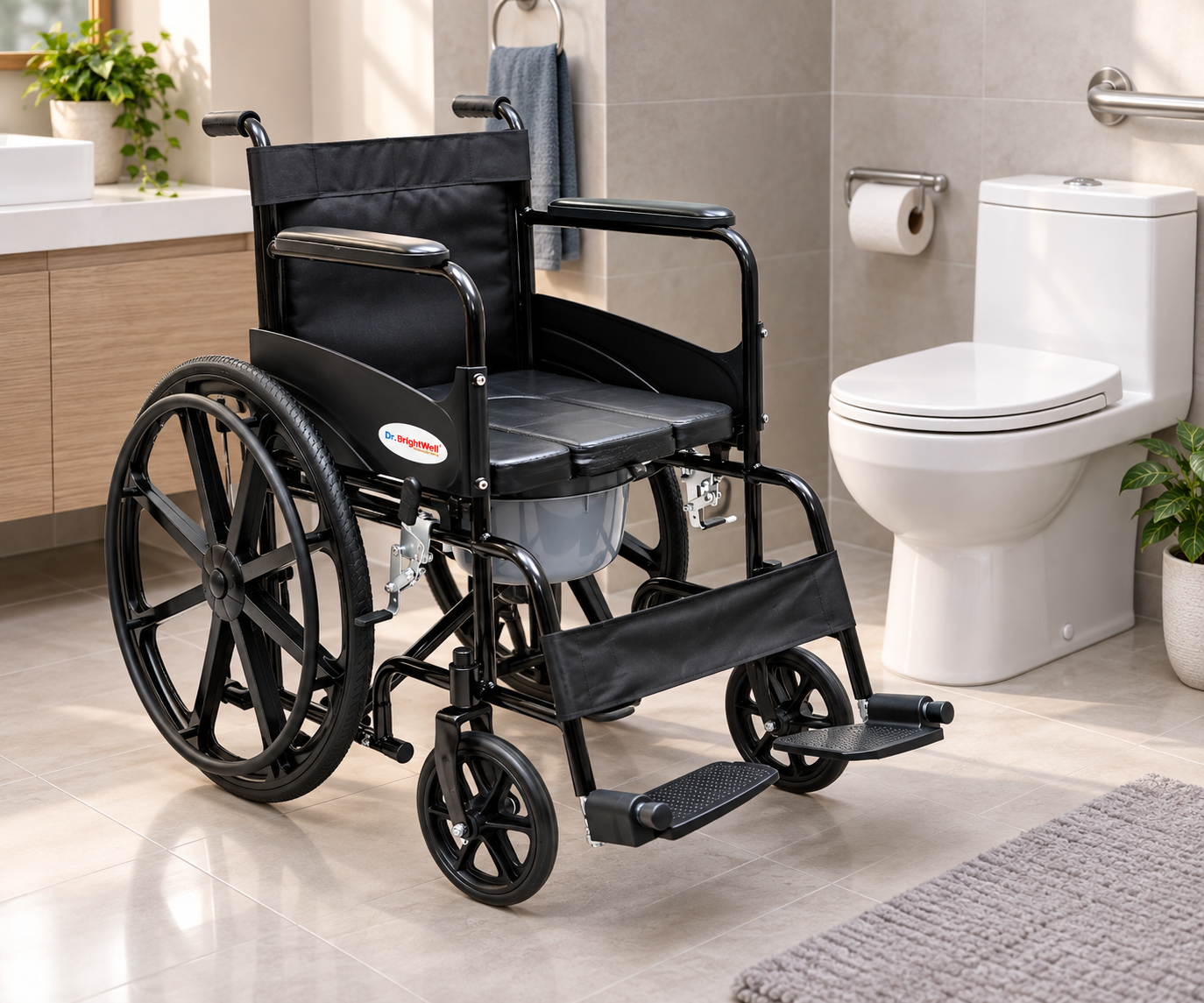
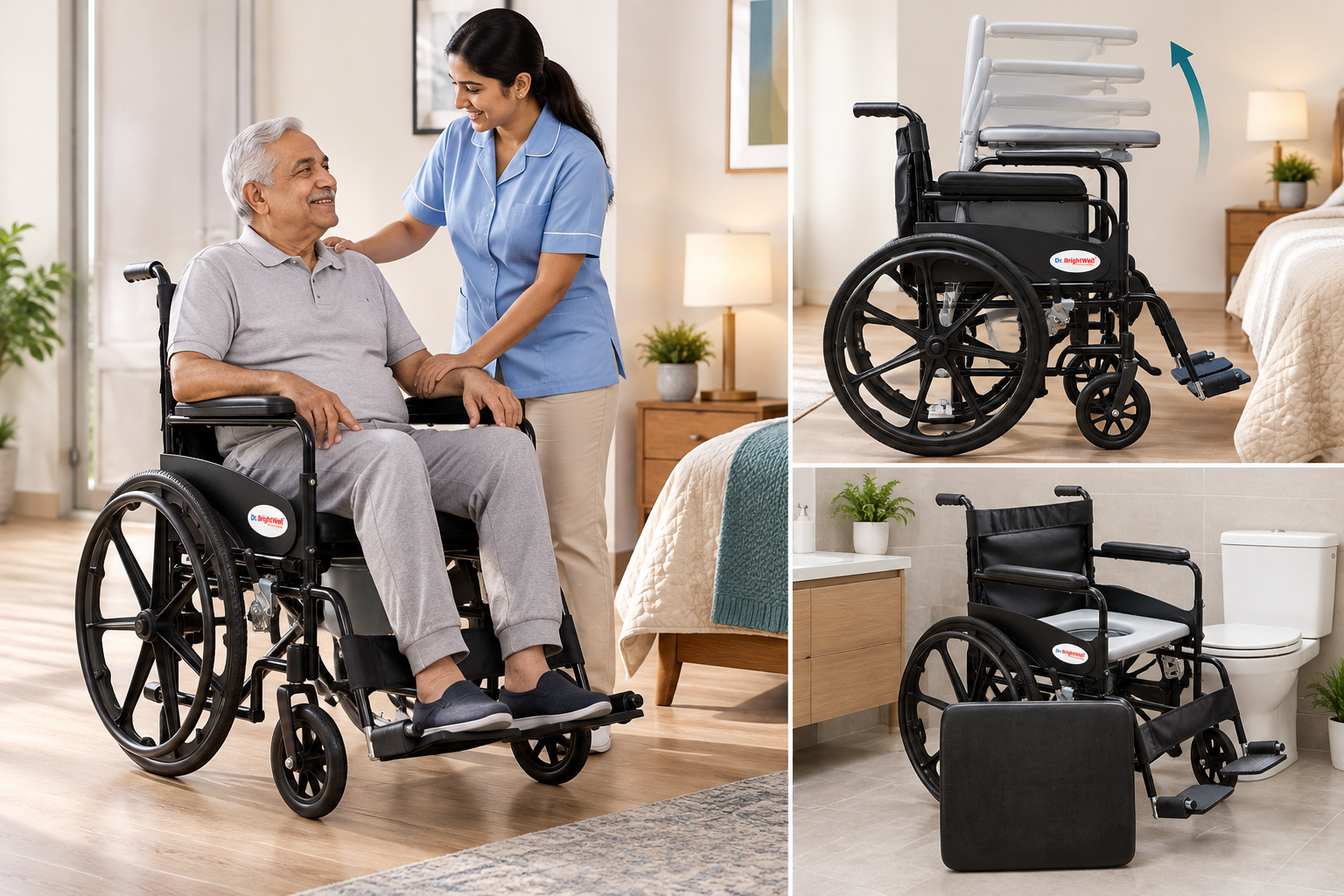
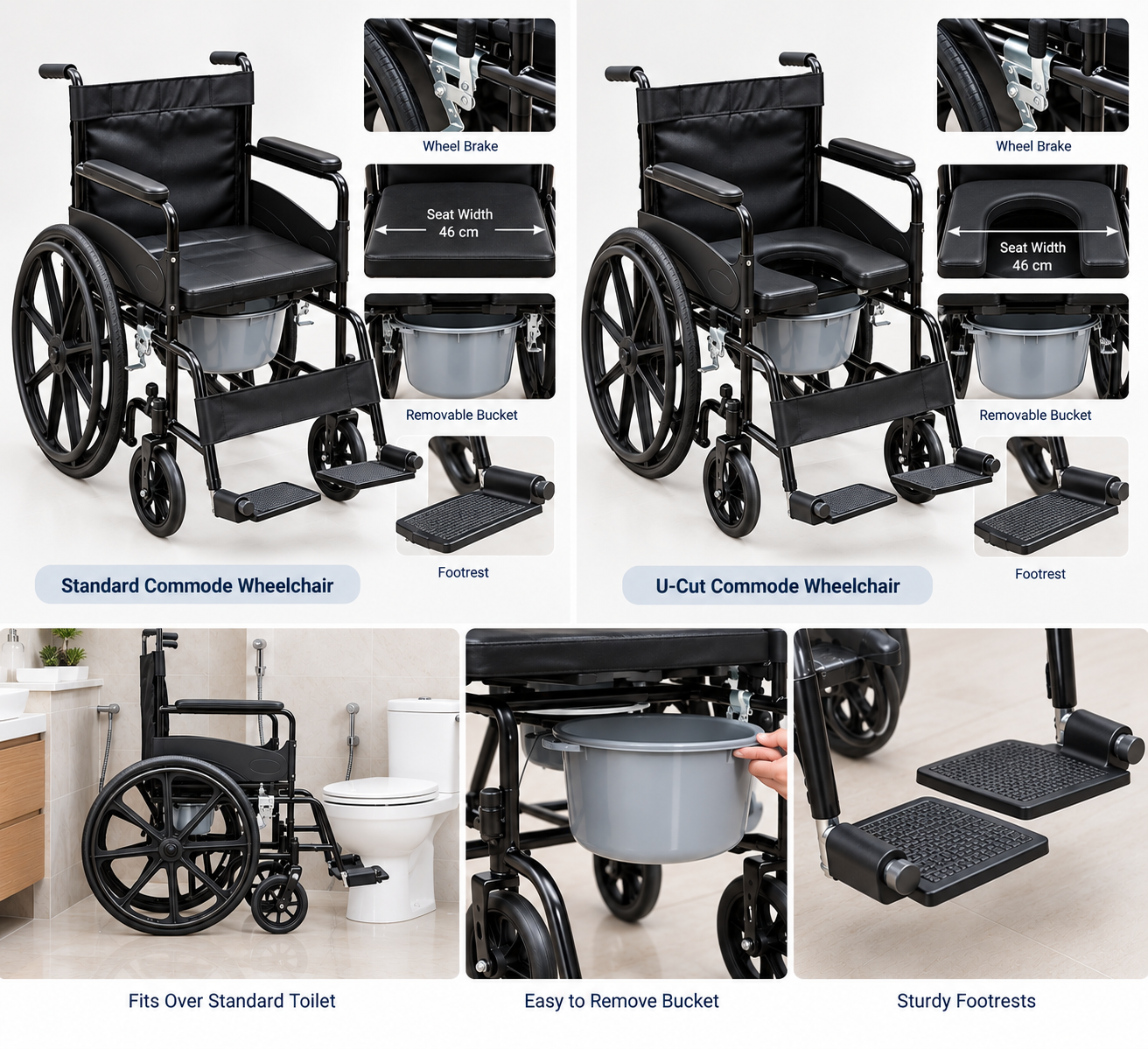
3. Commode Wheelchair U-Cut
A
commode wheelchair U-Cut combines wheelchair mobility with a toileting opening and usually a
removable pan or bucket. Depending on the design, it may be:
- Self-propelled
- Attendant-propelled
- Suitable for use directly over a toilet
- Suitable for showering as well
| Best for | Drawbacks |
|---|
| Regular wheelchair users | More expensive than a basic commode |
| People who cannot safely walk to the bathroom | Heavier and larger |
| Caregiver-assisted transfers | Bathroom door width and turning space matter |
| Situations where wheelchair mobility and toileting need to be combined | Not every commode wheelchair U-cut fits over every toilet |
4. Seat-Lift Wheelchair
A
seat-lift wheelchair raises the user’s seated position to help with standing or transfers. It can be
useful when the main difficulty is
getting up from the wheelchair, rather than reaching the toilet.
| Best for | Drawbacks |
|---|
| Difficulty rising from a seated position | Not necessarily a commode |
| Transfer assistance | Does not automatically solve toilet access |
| Users who already have adequate toilet access | More complex and potentially more expensive |
| Situations where standing support is the main requirement | Toilet compatibility depends on the user’s transfer ability and bathroom setup |
Commode vs Commode Wheelchair U-Cut vs Seat-Lift Wheelchair
| Feature | Commode | Wheeled Commode | Commode Wheelchair U-Cut | Seat-Lift Wheelchair |
|---|
| Toilet nearby | ✓ | ✓ | ✓ | Depends |
| Removable commode pan | Usually | Usually | Usually | Usually no |
| Can move user while seated | No | ✓ | ✓ | ✓ |
| Designed for wheelchair mobility | No | Limited | ✓ | ✓ |
| Helps standing/transfer | Limited | Limited | Limited–moderate | ✓ |
| Best for caregiver use | ✓ | ✓ | ✓ | ✓ |
| Best for independent wheelchair user | No | Usually no | Yes, depending on model | Yes, depending on model |
Which One Should You Buy?
Choose a commode when:
The person can transfer independently or with minimal assistance and mainly needs a toilet closer to the bed.
Choose a commode with wheels when:
The person can sit safely but needs a caregiver to move them to the bathroom.
Choose a commode wheelchair U-Cut when:
The person already depends on a wheelchair and needs
mobility + toileting in the same chair.
Choose a seat-lift wheelchair when:
The main problem is
standing up or transferring, rather than the absence of toilet access.
5 Things to Check Before Buying
| Check | Why it matters |
|---|
| User weight capacity | Must safely support the user |
| Seat width & depth | Affects comfort and stability |
| Wheel/brake system | Important when transferring or positioning |
| Toilet compatibility | The chair may not fit over every toilet |
| Bathroom/doorway space | A larger chair may not manoeuvre easily |

Transfer Safety Matters
A toilet solution is only useful when the
transfer itself is safe. For someone with significant
weakness, poor balance or limited ability to stand, the chair should be selected based on their actual transfer ability
rather than simply choosing the most feature-rich product. WHO recommends individual assessment, fitting, training and
follow-up for wheelchair provision.
[1] When transferring:
- Lock wheelchair/commode brakes.
- Keep the floor dry and clear.
- Avoid pulling or lifting from removable armrests.
- Get professional guidance when the person cannot transfer safely without substantial assistance. [2][3]
Bottom Line
Need a toilet near the bed? → Commode. Need wheels to move the person? → Wheeled
commode. Need wheelchair mobility + toileting together? → Commode wheelchair
U-Cut.
Need help standing from a wheelchair? → Seat-lift wheelchair. The best product is the one
that
matches the person’s mobility, transfer ability and bathroom environment—not simply the one with the most
features. [1]
References
[1] World Health Organization. Wheelchair Provision Guidelines. WHO, 2023. (World Health
Organization)
[2] Kingston and Richmond NHS Foundation Trust. Static Commode. Occupational Therapy
guidance. (Kingston &
Richmond NHS Trust)
[3] Veterans Health Library. Transfer: Wheelchair to Chair. Guidance on safe wheelchair
transfers. (Veterans Health Library)
[4] Guy’s and St Thomas’ NHS Foundation Trust. Falls – Staying Safe at Home. Guidance on
commodes and home adaptations. (Guy’s and St Thomas’ NHS
Trust)