No products in the cart.
No products in the cart.

A short walk after meals especially 10–15 minutes at an easy-to-moderate pace can be a smart habit. Research consistently links post-meal walking with smaller blood sugar spikes, and it may also help with digestion, daily movement, and long-term weight management when done consistently. (Springer)
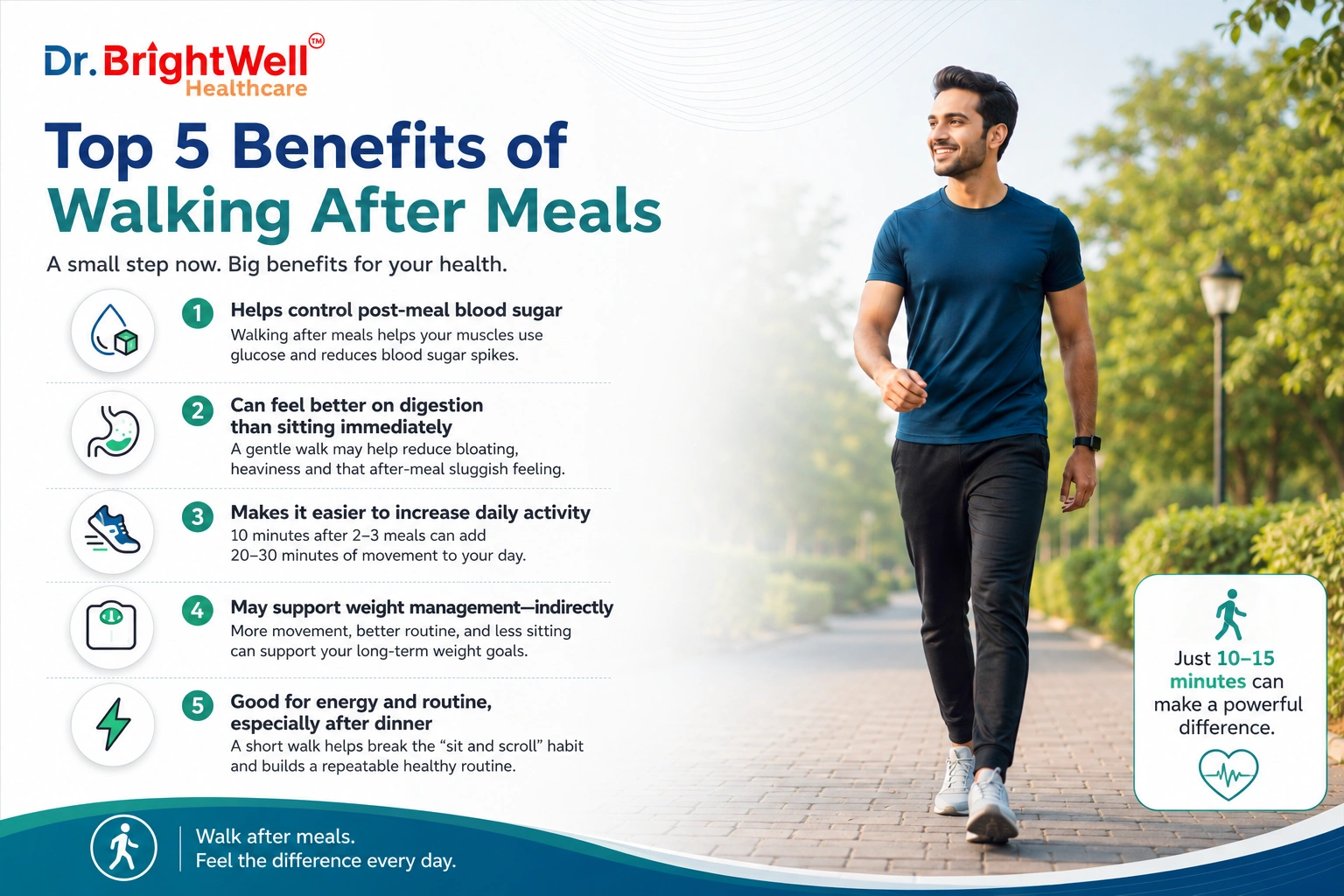
Why it matters:
Best use case: after your largest or carb-heavier meal
A gentle walk may help some people feel less sluggish, bloated, or heavy after eating.
Important: this is about gentle movement, not a post-dinner workout.
A 10-minute walk after 2–3 meals can quietly add 20–30 minutes of movement to your day without needing a separate workout block.
That matters because consistency usually beats “all or nothing” exercise habits.
Walking after meals is not a magic fat-loss trick, but it can help by:
Important reality check: walking helps, but meaningful fat loss usually depends on your overall calorie intake, diet quality, sleep, and consistency—not just hitting a step number. (Psychology Today)
A short walk after dinner can be a practical way to:
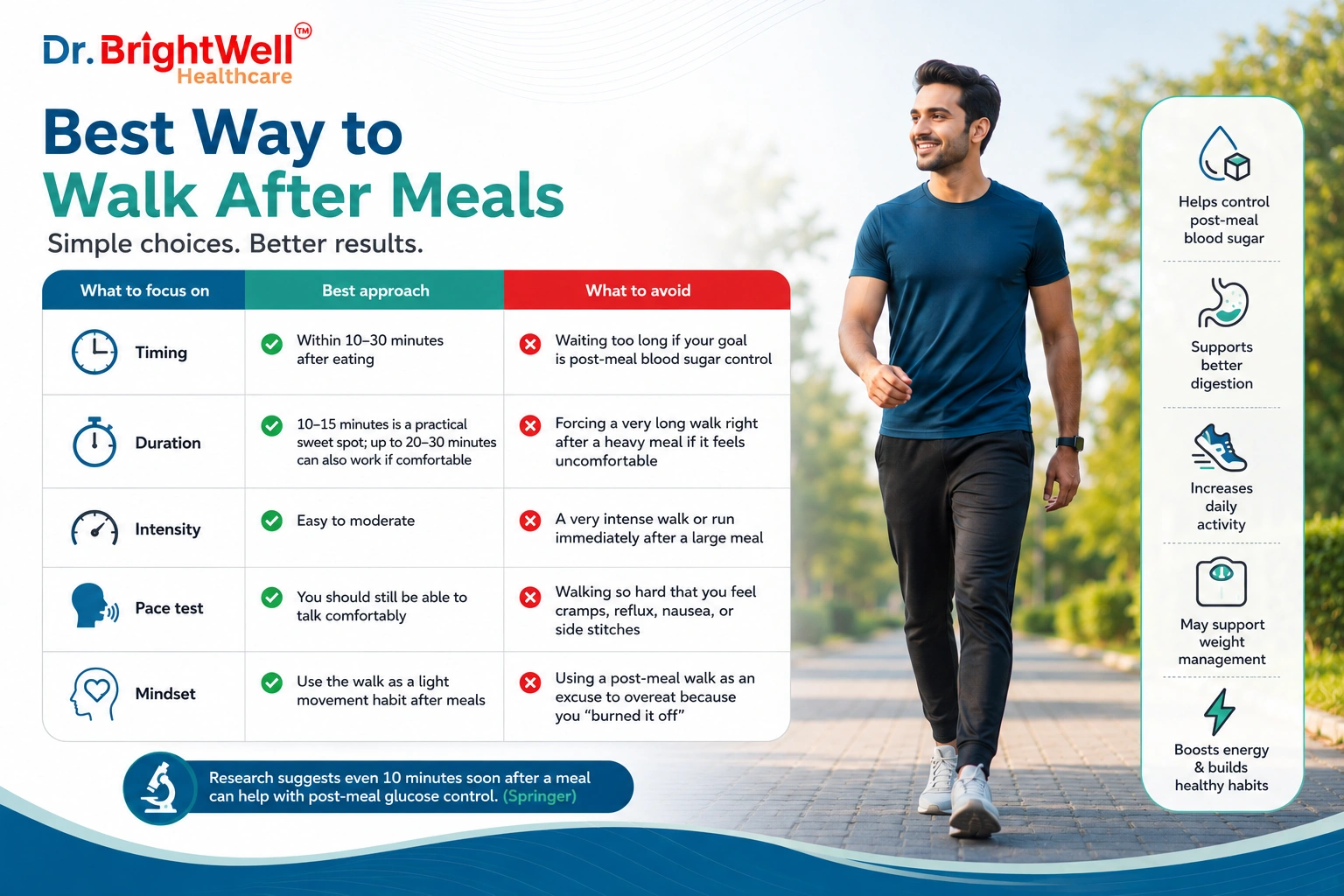
| What to focus on | Best approach | What to avoid |
|---|---|---|
| Timing | Within 10–30 minutes after eating | Waiting too long if your goal is post-meal blood sugar control |
| Duration | 10–15 minutes is a practical sweet spot; up to 20–30 minutes can also work if comfortable | Forcing a very long walk right after a heavy meal if it feels uncomfortable |
| Intensity | Easy to moderate | A very intense walk or run immediately after a large meal |
| Pace test | You should still be able to talk comfortably | Walking so hard that you feel cramps, reflux, nausea, or side stitches |
| Mindset | Use the walk as a light movement habit after meals | Using a post-meal walk as an excuse to overeat because you “burned it off” |
Research suggests even 10 minutes soon after a meal can help with post-meal glucose control. (Springer)
| Pros | Cons / When it may not feel good |
|---|---|
| May reduce post-meal glucose spikes | Brisk walking too soon after a very heavy meal can feel uncomfortable |
| Easy to build into daily life | Some people with acid reflux, stomach sensitivity, dizziness, or certain medical conditions may need to go slower or wait a bit |
| Adds steps without needing a full workout session | It helps health, but it’s not a shortcut for rapid weight loss |
| Goal | Recommended duration | How to use it |
|---|---|---|
| Blood sugar control | 10–15 minutes right after meals | A strong, realistic baseline for managing post-meal glucose spikes |
| Extra activity / weight management | 15–30 minutes after one meal a day | Especially after dinner, this can be a useful add-on for increasing daily movement |
| If you’re just starting | 5–10 minutes | Begin small and increase only if it feels comfortable after meals |
Yes—generally, yes. A short, easy-to-moderate walk after meals is linked with better post-meal blood sugar control and can be an easy way to reduce sitting time. The evidence is strongest for walking soon after eating, especially for glucose control. (Springer)
There isn’t one universal medical “6-6-6 walking rule.” Online, people use this term in different ways—often as a social-media walking routine, not a formal clinical guideline. If you plan to mention it in the blog, it’s better to label it as an internet trend rather than an evidence-based medical recommendation.
You can, but for most people it’s not the best post-meal strategy.
A better approach:
Trying to do all 10,000 steps after one meal may be impractical, uncomfortable, and unnecessary for the benefits most people want from a post-meal walk.
Yes, if it feels comfortable. In fact, 10–30 minutes after dinner is a reasonable range. If a full 30 minutes feels too much after eating, start with 10–15 minutes.
For most people, losing 2 kg in one week by walking alone is not realistic or advisable. A large weekly weight drop usually requires a very aggressive calorie deficit, and walking by itself rarely creates that much energy deficit safely.
A more accurate blog answer:
For most adults, 10,000 steps is roughly 6.5 to 8 km, depending on stride length, height, and walking speed.
A simple line for the blog:
Walking can absolutely be part of a 20 kg weight-loss journey, but walking alone is usually not the whole answer. Long-term weight loss usually comes from a combination of:
Depends on the goal:
For a meal walk, prioritize timing + comfort over intensity.
Walking can help, but 10 kg weight loss typically requires a broader plan, not just a step target.
A realistic formula:
There is no fixed number. Weight loss from 10,000 steps/day depends on:
So the honest answer is:
The step goal itself isn’t harmful, but the downsides are mostly about context:
Also, health benefits don’t begin only at 10,000—many benefits happen well below that too. (Verywell Health)
There isn’t one universally “best” time for fat loss. The best time is the one you’ll do consistently.
That said:
For this blog topic specifically: after meals is a smart choice because it combines movement with meal timing benefits.
If you want the biggest return for the least effort, this is a strong post-meal walking rule:
That’s usually the sweet spot between science, comfort, and consistency.