No products in the cart.
No products in the cart.


A pulse oximeter is a small fingertip device that estimates blood oxygen saturation (SpO₂) and measures pulse rate. [1] [5]
But choosing one for your home should not simply be about finding the cheapest device or the one with the most features.
The better question is: Which pulse oximeter will be easy to use correctly and suit the person who will actually use it?
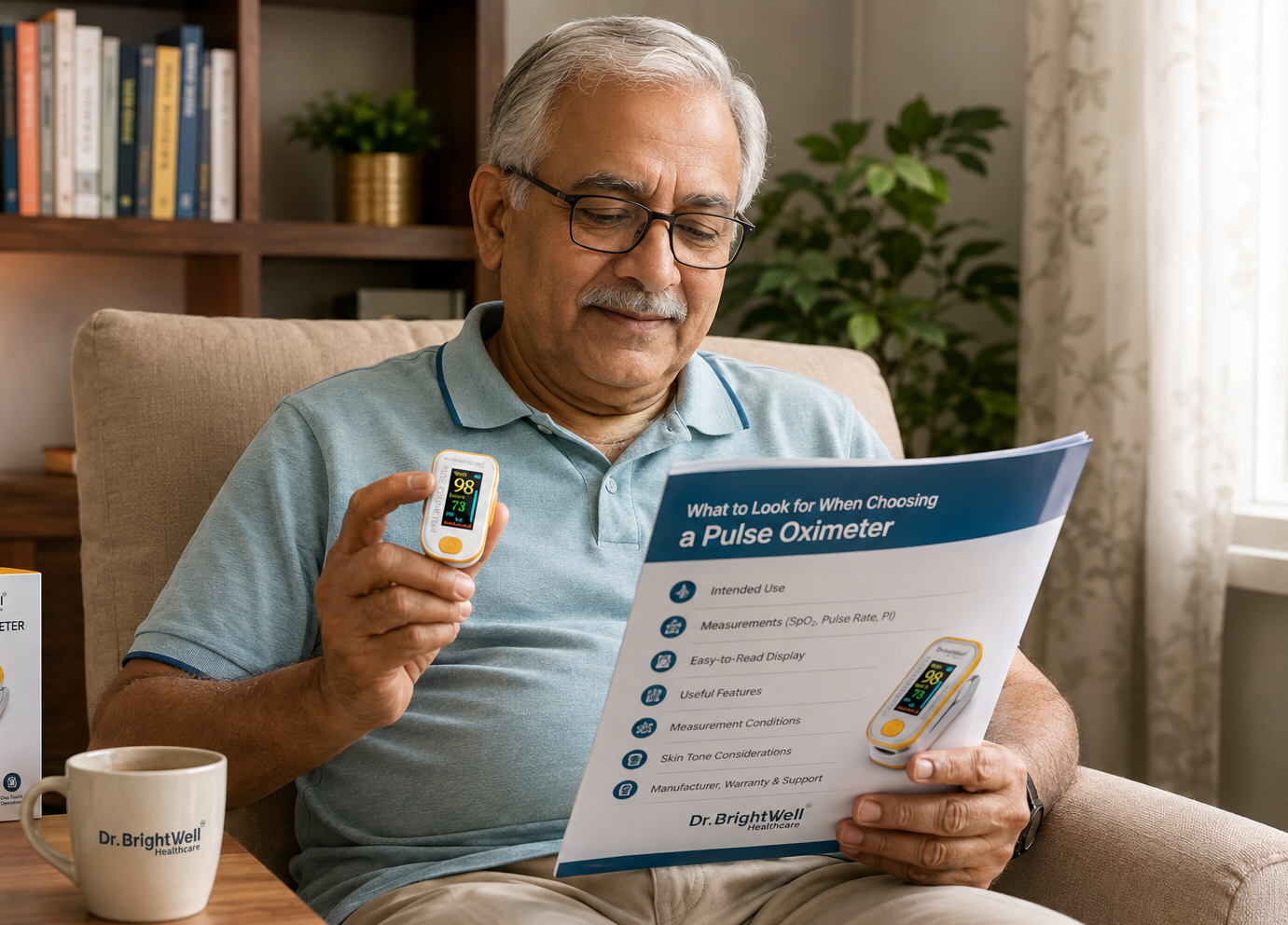
Before comparing models, decide why you need the device.
For many households, a fingertip pulse oximeter is convenient for occasional or routine home monitoring. However, some people may need monitoring as part of a healthcare professional’s advice.
Check the manufacturer’s stated intended use and instructions before buying. A general wellness product should not automatically be treated as a device intended for medical decision-making. The FDA distinguishes between pulse oximeters intended for medical purposes and products marketed for general wellness. [1]
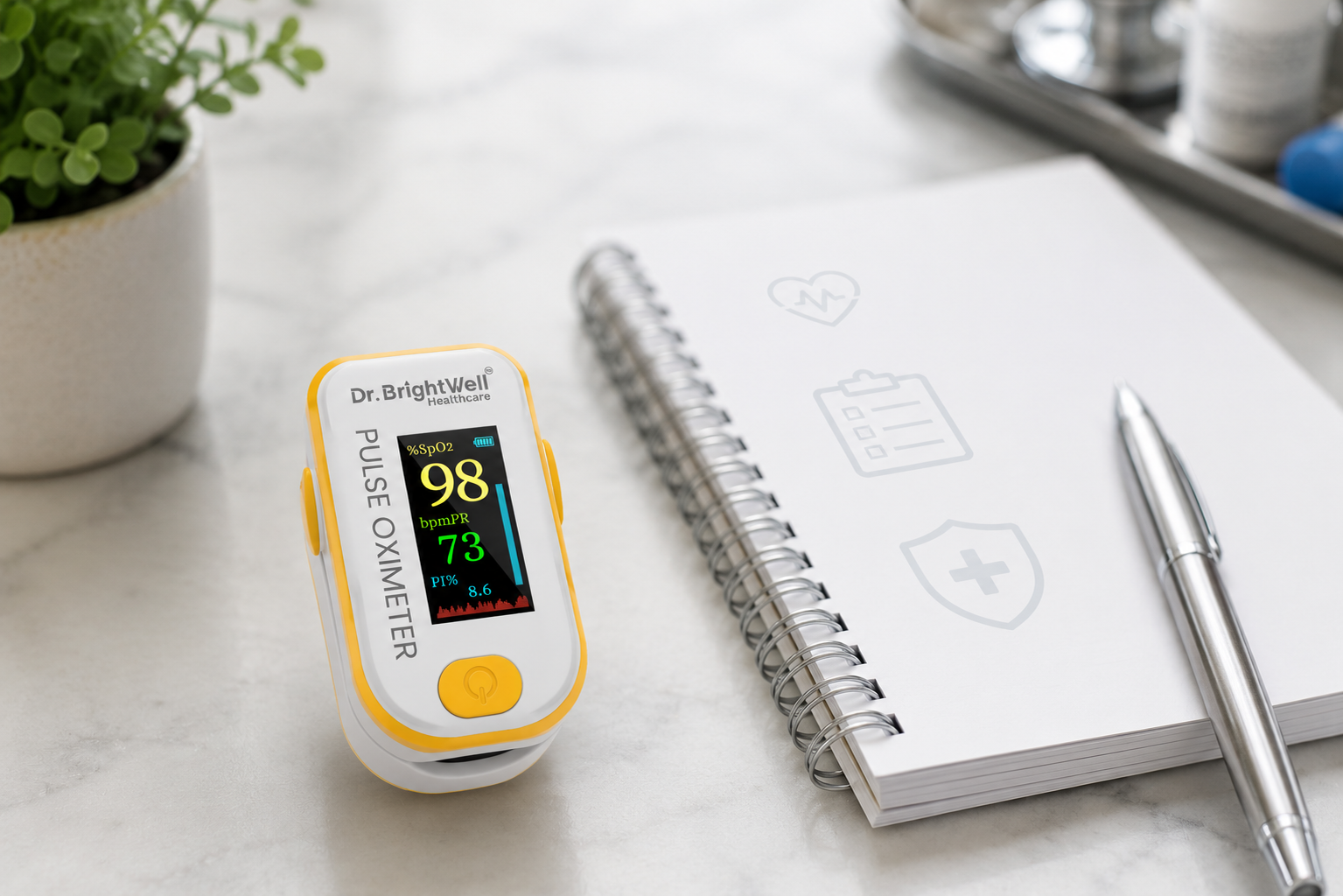
At minimum, most home users will want to see:
Some models also provide Perfusion Index (PI), which gives additional information about the pulse signal detected at the measurement site. PI is not the same as SpO₂ and should not be treated as a standalone measure of health. [1]
For most households, these basic measurements matter more than having a long list of extra functions.
A technically capable pulse oximeter is not very useful if the person cannot comfortably read the screen.
For parents and grandparents, look for:
This matters even more when the user needs to check the device independently.
Simple beats complicated.
Extra functions can be helpful, but they should solve a real problem.
| Feature | Why it can be useful |
|---|---|
| Color/OLED display | Makes readings easier to view |
| PI | Provides additional pulse-signal information |
| Memory | Helps track previous readings when needed |
| Alarm | Can alert users when preset limits are reached |
| Auto shut-off | Helps conserve battery |
| One-touch operation | Simplifies everyday use |
A pulse oximeter with fewer features can still be a good choice when it covers the user’s actual needs.
A good device cannot compensate for poor measurement technique.
The FDA recommends using the device with a warm, relaxed hand, staying still and waiting until the displayed value becomes stable. Nail polish or artificial nails can also affect readings. [1]
Other factors that may affect pulse oximeter readings include poor circulation, skin temperature, skin pigmentation, skin thickness and tobacco use. [1]
This makes the manufacturer’s instructions an important part of the buying decision—not just the hardware itself.
For a deeper explanation, see Dr.Brightwell’s guide: How Accurate Is a Pulse Oximeter? 7 Factors That Affect Readings.
Pulse oximeter performance can vary across different skin pigmentations. The FDA has acknowledged this issue and proposed updated testing recommendations to improve evaluation of pulse oximeter performance across skin tones. [2]
For consumers, the practical lesson is simple: do not assume a device is accurate simply because it displays a number.
When comparing products, look for clear manufacturer information about intended use, performance, limitations and quality or regulatory information rather than relying only on marketing phrases.
A home healthcare device should be supported after purchase.
Before buying, check:
A slightly more expensive device from a manufacturer with clear documentation and support may be more practical than an anonymous low-cost option.
There is no single best pulse oximeter for parents or best pulse oximeter for grandparents.
For an older user, prioritize:
Features such as a readable OLED display, straightforward operation and clearly presented SpO₂ and pulse-rate information can make everyday use easier.
The most important thing is that the person can use the device correctly and understand what the display is showing.