No products in the cart.
In this article
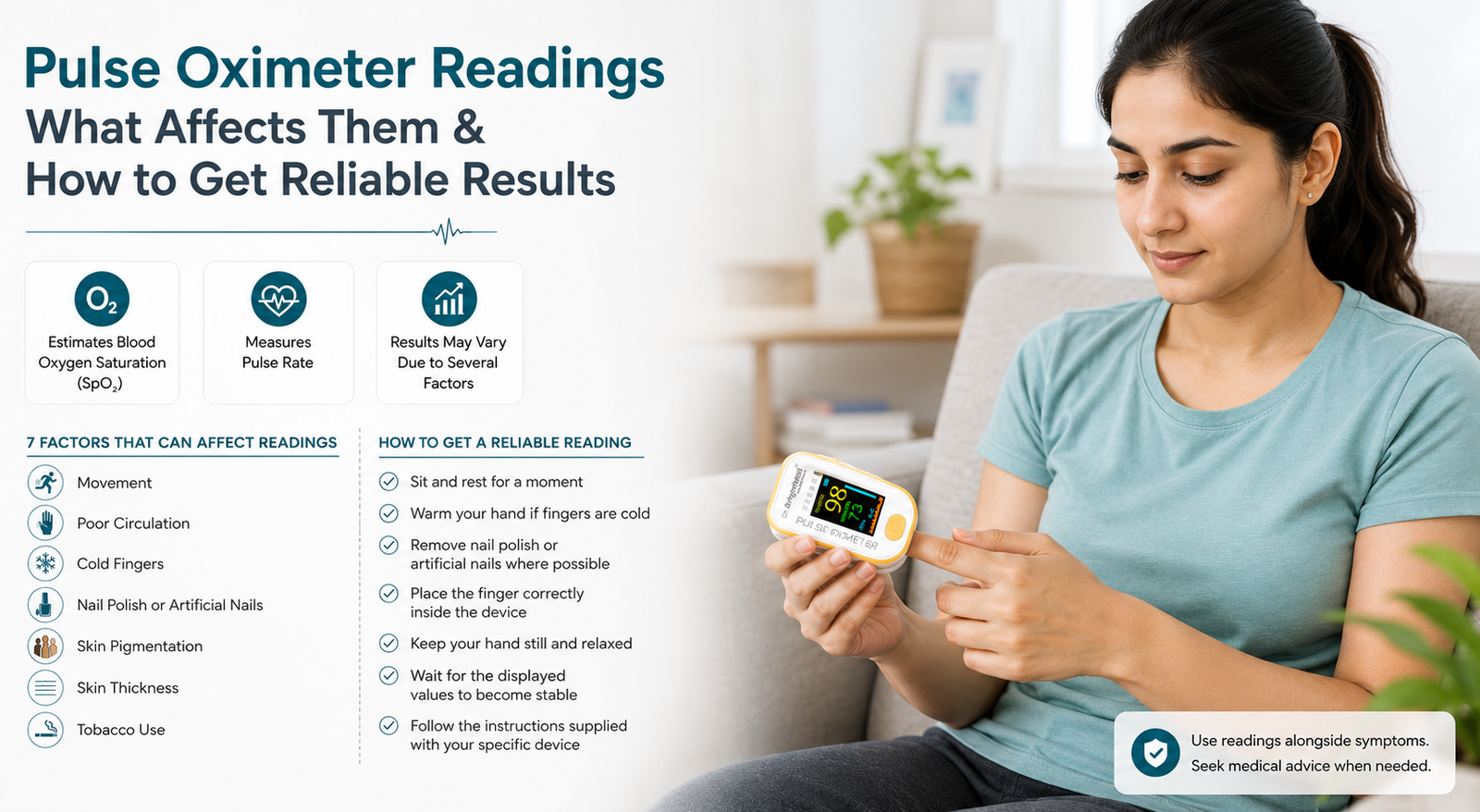
ToggleA pulse oximeter is useful for estimating blood oxygen saturation (SpO₂) and pulse rate, but its reading is not perfect. Accuracy can be affected by factors such as movement, poor circulation, cold fingers, nail polish, skin pigmentation, skin thickness and tobacco use. [1][2]
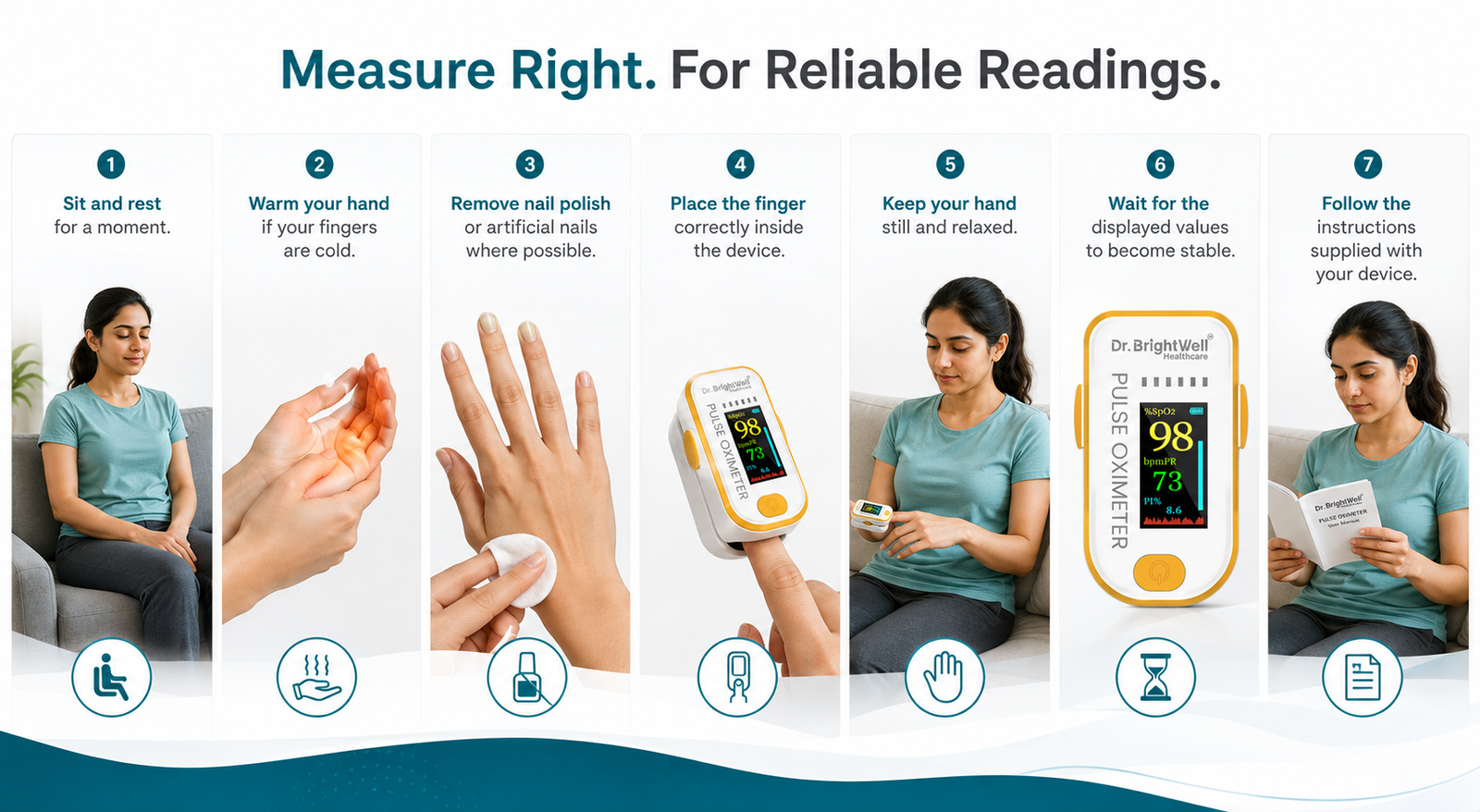
For a better reading, rest, warm your hand, keep the finger still, remove nail polish or artificial nails, and wait for the display to become stable. Most importantly, do not use one number alone to diagnose a medical problem; consider symptoms and seek professional advice when needed. [1][6]
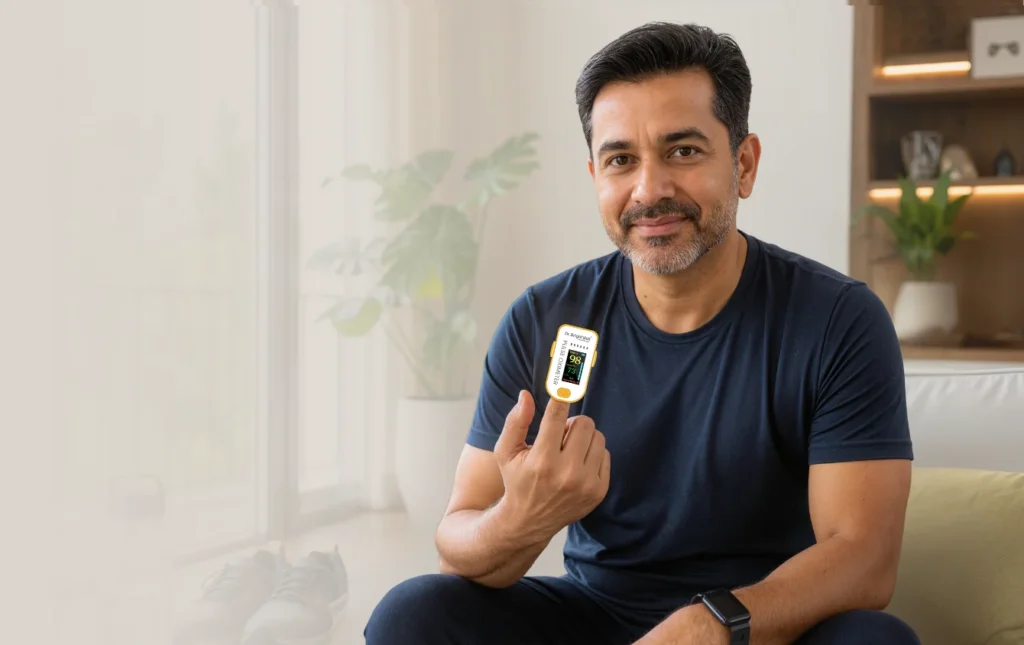
A pulse oximeter is a small device that estimates blood oxygen saturation (SpO₂) and pulse rate using a sensor placed on the finger. It can be useful for home monitoring, but the number on the screen should not be treated as a perfect measurement or a diagnosis. [1][2]
Several factors can affect the reading. Knowing these factors—and using the device correctly—can help you get a more useful result.
A pulse oximeter estimates the percentage of haemoglobin carrying oxygen in the blood and also measures pulse rate. Some devices additionally show a pulse waveform, signal-strength indicator or Perfusion Index (PI). The exact features vary by device, so users should check the manufacturer’s instructions. [2][5]
The important point is that SpO₂ is an estimate. The FDA notes that pulse oximeters have limitations and that readings should be considered alongside symptoms and other clinical information. [1][2]
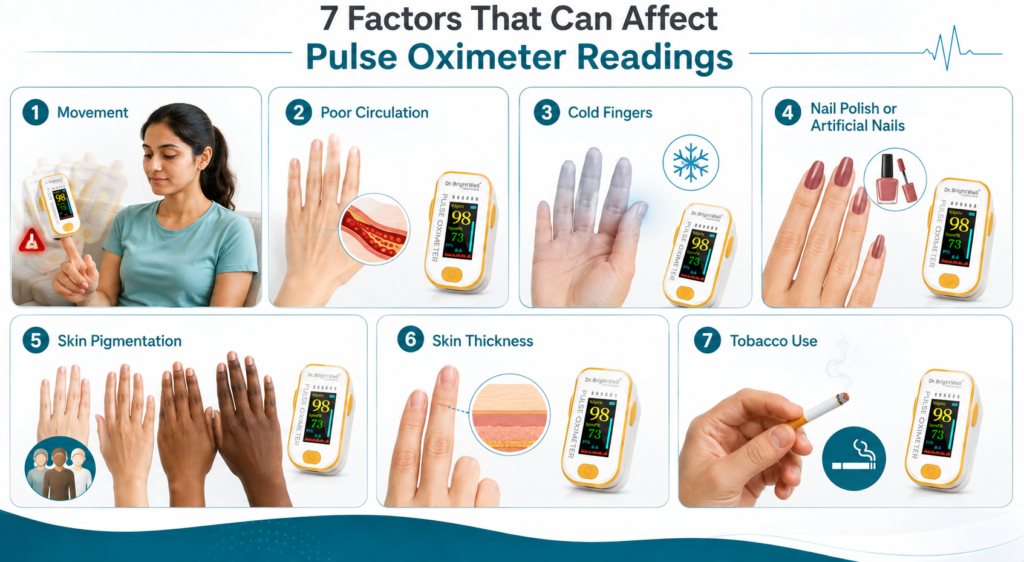
Moving your finger or hand while the device is measuring can interfere with the signal and produce an unreliable reading. Motion is a recognised source of pulse-oximetry error. [1][2]
A pulse oximeter relies on detecting a pulsatile blood signal. Poor peripheral circulation or low perfusion can make that signal weaker, affecting the reading. [1][5]
Cold fingers may be associated with weaker peripheral circulation and can make it more difficult for the device to obtain a reliable signal. The FDA identifies skin temperature and poor circulation as factors that may affect readings. [1]
Nail polish and artificial nails may interfere with the light used by the pulse oximeter, although the effect can vary depending on the device, polish colour and measurement conditions. [1][6]
The FDA says current scientific evidence indicates that pulse oximeter performance can differ across skin pigmentation, particularly in some circumstances and at certain oxygen saturation levels. The agency has proposed updated testing recommendations to improve evaluation across different skin tones. [3]
The FDA lists skin thickness among factors that can affect pulse oximeter readings. [1]
Because fingertip sensors analyse light passing through tissue, differences at the measurement site can influence the signal. However, the effect may vary between devices and users, so the manufacturer’s instructions should take priority.
The FDA identifies current tobacco use as a factor that may affect pulse oximeter readings. [1]
Tobacco use can also be relevant when interpreting oxygen-related measurements and symptoms. This is one reason a pulse oximeter result should not be interpreted in isolation, particularly when someone is unwell.
Correct technique matters. Before measuring:
These steps are consistent with patient guidance on improving home pulse-oximeter readings. [6]
A single reading may not represent the person’s usual level. If a result appears unexpected, repeat the measurement under the same good conditions and record the result if monitoring has been recommended by a healthcare professional. Do not repeatedly measure in a way that delays medical care.
When choosing a pulse oximeter for elderly parents, do not focus only on price.
Look for practical features such as:
A device that is simple to use correctly is often more useful than one with features your family will rarely use.
For shoppers comparing a pulse oximeter price in Mumbai or elsewhere, compare the overall device, intended use, usability, warranty, instructions and support—not just the lowest listed price. Product specifications and warranty details should be verified on the manufacturer’s current product page before publication or purchase. [7][8]
Perfusion Index (PI) is an additional value available on some pulse oximeters. It is derived from the pulse oximeter’s photoplethysmography (PPG) signal and compares the pulsatile blood-flow component with the non-pulsatile component at the sensor site. In simple terms, it provides an indication of the strength of the pulse signal detected at the finger.
A higher PI generally indicates a stronger pulsatile signal at the measurement site, while a lower PI can occur when peripheral blood flow is weaker. PI can be influenced by factors such as hand temperature, vascular tone, blood flow, movement, and the position of the sensor.
Importantly, PI is not the same as SpO₂ and does not directly measure blood oxygen levels. It is also not a standalone diagnosis of circulation or overall health. PI values can vary between people, measurement sites and devices, so there is no single universal “normal” PI value that should be applied to everyone.
For home users: Think of PI as a helpful signal-strength/peripheral-perfusion indicator that can provide additional context while taking a pulse-oximeter reading. A low PI may make measurement more challenging, particularly when the finger is cold or peripheral circulation is reduced.
A pulse oximeter reading is more useful when the measurement conditions are good.
Think: Warm hand + correct placement + no movement + stable reading = better measurement conditions.
And remember: better measurement conditions do not make a pulse oximeter infallible. [1][2]

A pulse oximeter should not be used by itself to diagnose hypoxia or another medical condition. The FDA recommends considering readings together with symptoms and other relevant information. [1][2]
Seek medical advice when:
The exact SpO₂ level that requires action can vary according to the person’s health, altitude, diagnosis and advice from their healthcare professional. Do not apply a single universal threshold to every person without medical guidance.
Do not delay professional medical care simply because a pulse oximeter gives a reassuring number when the person is clearly unwell. [1][2]
For families looking for a fingertip pulse oximeter for routine home monitoring, Dr.Brightwell offers options such as OxiCheck and OxiBright. Product features, warranty periods and availability should be confirmed on the relevant current Dr.Brightwell product page before publication. [7][8]
Relevant features listed by Dr.Brightwell:
Best suited for: Families looking for a straightforward device for routine home monitoring, subject to the manufacturer’s stated intended use.
Explore the Dr.Brightwell OxiCheck Pulse Oximeter
Relevant features listed by Dr.Brightwell:
Best suited for: Users who prefer a compact, simple fingertip device with an easy-to-view display, subject to the manufacturer’s stated intended use.
Explore the Dr.Brightwell OxiBright Fingertip Pulse Oximeter
Dr.Brightwell’s current product range also includes the OxiPrime™ Pulse Oximeter, which is listed as offering SpO₂, pulse rate and PI monitoring with a colour OLED display and low-battery indicator. Confirm the current specifications directly on the product page before publishing.
The FDA says current evidence indicates that pulse oximeter performance can differ across skin pigmentation. The agency has been working on updated testing recommendations intended to improve evaluation across skin tones. [3]
There is no single device that is best for every family. Look for a device that is simple to use, easy to read and appropriate for the intended home-monitoring use. Features such as a clear display and straightforward operation may be particularly helpful for elderly users. Product specifications and warranty claims should be checked on the manufacturer’s current product page. [7][8]
1. FDA — Pulse Oximeter Basics.
3. FDA — Updated Recommendations for Pulse Oximeter Performance Across Skin Tones
4. WHO — Oxygen: What is a pulse oximeter and how to use it?
5. WHO — Pulse Oximetry Training Manual
6. MedlinePlus Magazine — Pulse Oximeters
7. Dr.Brightwell — OxiBright™ Fingertip Pulse Oximeter
8. Dr.Brightwell — OxiCheck Pulse Oximeter
9. Dr.Brightwell — Common Mistakes to Avoid While Using a Nebulizer
9. Peripheral perfusion index of pulse oximetry in adult patients: A narrative review