No products in the cart.
No products in the cart.
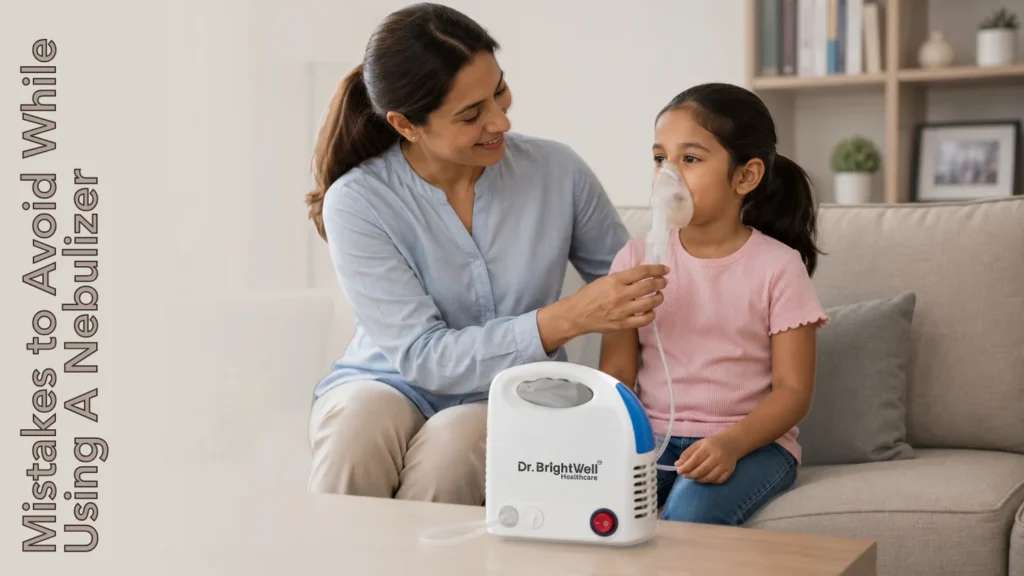
A nebulizer can help deliver medicine directly to the lungs—but only when it’s used correctly. Small errors like a loose mask, poor cleaning, wrong medicine timing, or stopping too early can reduce how much medicine actually reaches the airways. In children, these mistakes are even more common because movement, crying, and poor mask fit can affect treatment.
This guide covers the most common nebulizer mistakes, what to do instead, and answers to the questions parents often search for online.
The most common nebulizer mistakes include:
If you want the treatment to work well, focus on three things: correct medicine, correct technique, and clean equipment.
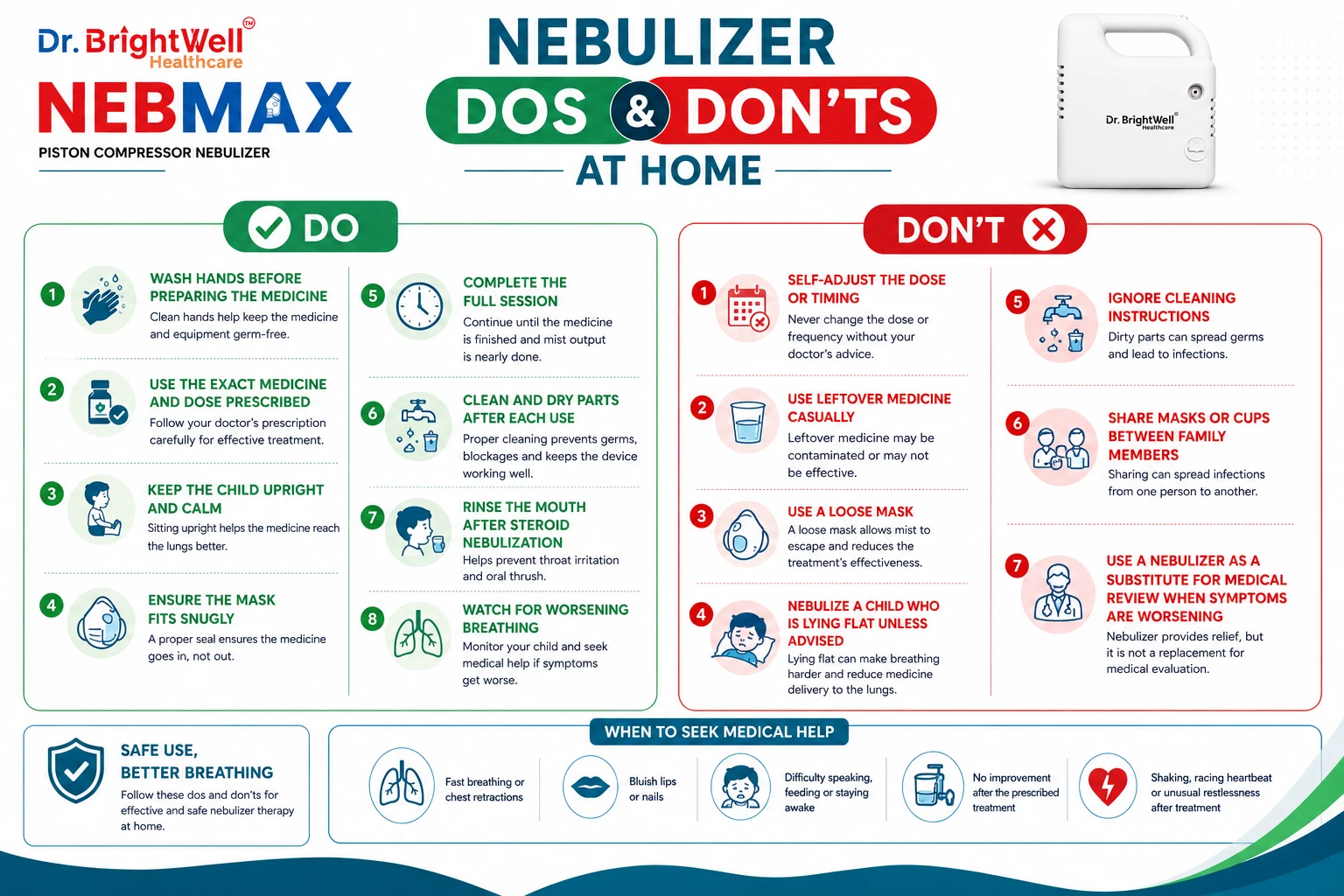
Common nebulizer mistakes include using the wrong dose, poor mask fit, nebulizing while the child is crying, stopping too early, poor cleaning, reusing leftover medicine, and using the nebulizer too often without medical advice.
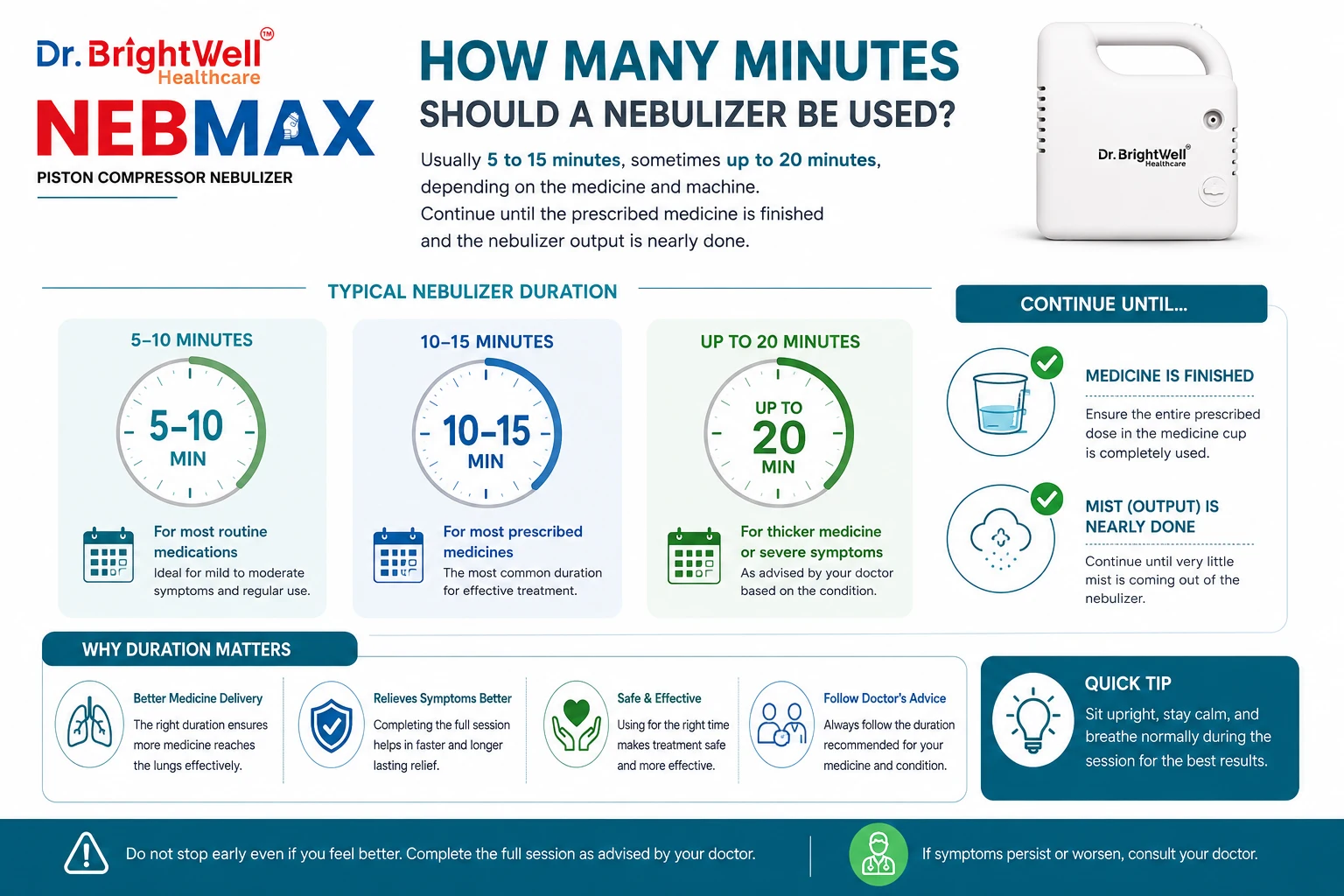
Usually 5 to 15 minutes, sometimes up to 20 minutes, depending on the medicine and machine. Continue until the prescribed medicine is finished and the nebulizer output is nearly done. (MedlinePlus)
Yes, in most cases. It may actually help soothe the throat. If the medicine contains a steroid, rinsing the mouth after use is especially important.
It can help relieve wheezing when the cause responds to the nebulized medicine—such as bronchospasm in asthma—but it won’t fix every cause of wheeze.
Nebulizing is a way to deliver medicine to the lungs. It is helpful when prescribed correctly, but wrong use, overuse, or poor cleaning can reduce benefits and increase risks.
There isn’t one single universal “4-4-4 rule” that applies to all patients. Different doctors, hospitals, and asthma action plans may use different short-term rescue instructions. Do not follow internet dosing shortcuts for albuterol unless they match your doctor’s written plan.
Only if your doctor has specifically advised that schedule for the medicine and the child’s condition. If you feel repeated doses are needed, seek medical advice rather than increasing frequency on your own.
This is not a standard rule you should apply without a doctor’s asthma action plan. Asthma treatment plans are individualized, especially for children.
There is no fixed puff-to-nebulizer conversion that works for everyone. It depends on the medicine, inhaler technique, spacer use, dose strength, age, and the reason for treatment. Ask your doctor or pharmacist before substituting one for the other.
Get medical advice urgently if your child has:
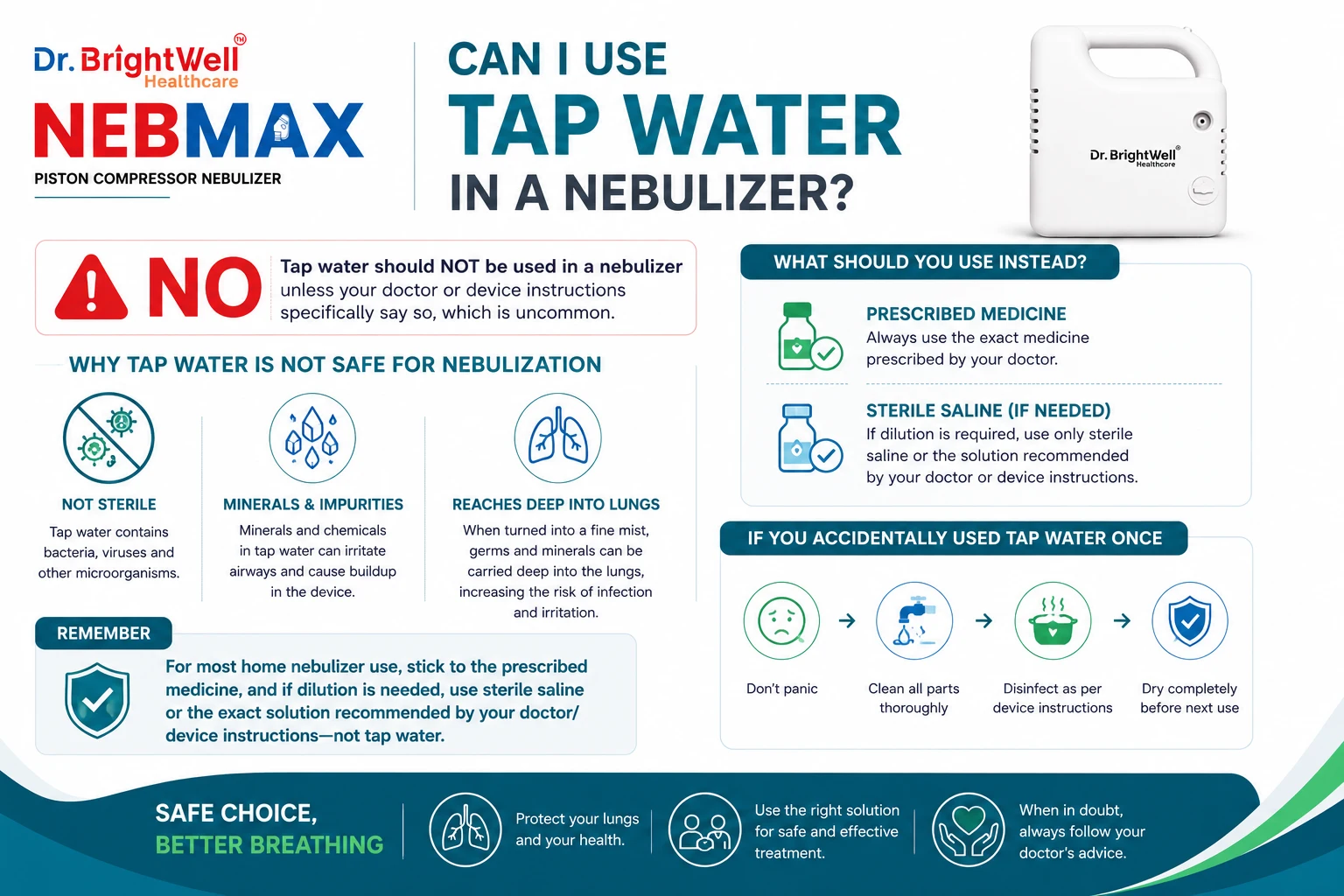
No—tap water should not be used in a nebulizer unless your doctor or device instructions specifically say so, which is uncommon. Tap water is not sterile, and when it is turned into a fine mist, germs and minerals can be carried deep into the lungs. For most home nebulizer use, stick to the prescribed medicine, and if dilution is needed, use sterile saline or the exact solution recommended by your doctor/device instructions—not tap water.
If you accidentally used tap water once, don’t panic, but clean and disinfect the nebulizer parts properly before the next use.
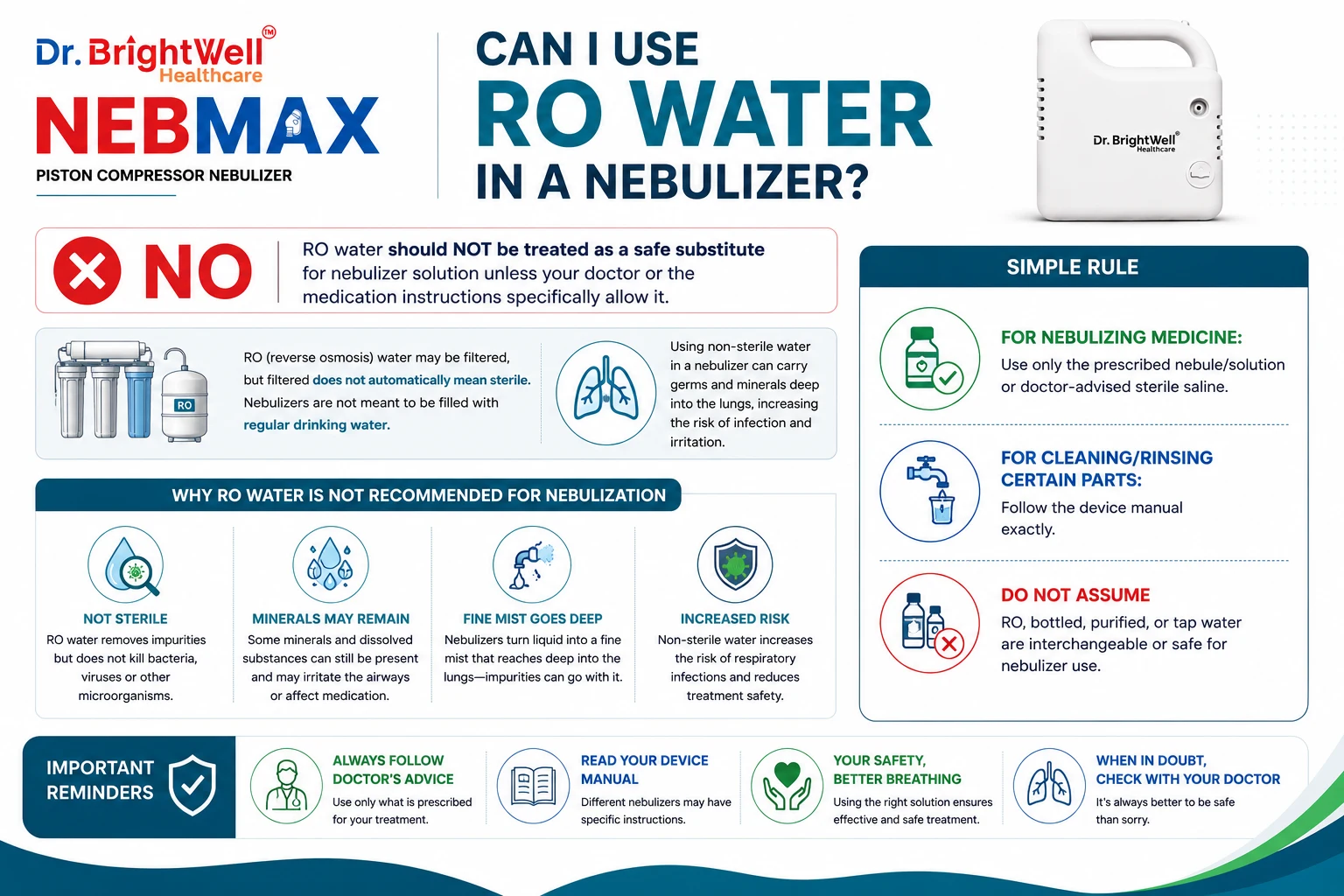
No—RO water should not be treated as a safe substitute for nebulizer solution unless your doctor or the medication instructions specifically allow it. RO (reverse osmosis) water may be filtered, but filtered does not automatically mean sterile, and nebulizers are not meant to be filled with regular drinking water. For nebulizer treatment, the safer default is prescribed medication, sterile saline, or only the liquid specifically recommended for that medicine/device.
Simple rule:
Suggested source links for citation/reference:
Most nebulizer mistakes happen at home because of small technique issues: wrong dose, loose mask, poor cleaning, or using it too often without guidance. Fixing these basics can improve medicine delivery, reduce side effects, and make nebulizer treatment safer for children and adults alike.
If you’re using a nebulizer for a child, remember the golden rule: the medicine matters, the mask fit matters, and cleaning matters just as much as the machine itself.
Looking to Buy Nebulizers for Home Use – See our featured nebulizer – NebMax™ Nebulizer – Powerful Fast Relief