- After every use: wash the medicine cup / chamber + mouthpiece or mask, rinse, and air-dry completely
- Do not wash the tubing unless your manufacturer explicitly says so
- Deep-clean / disinfect reusable parts regularly as directed in the device manual
- Wipe the compressor exterior, keep filters checked, and replace worn parts on schedule
- Never store damp nebulizer parts in a closed box or bag
Why it matters:
- Reduces germ buildup
- Prevents medicine residue from clogging jets/chambers
- Helps the nebulizer deliver mist more efficiently over time
Source-backed guidance from the American Lung Association nebulizer cleaning guide, Cambridge University Hospitals nebuliser guidance, and NHS patient leaflets on nebulizer care (Lung Association)
Nebulizer Cleaning Checklist: What to Do After Every Use
1) Disconnect and disassemble
Take apart only the removable medication-side parts:
- medicine cup / nebulizer chamber
- mouthpiece or mask
- top piece / baffle / lid (if your model has one)
Set the tubing aside. Most patient guides advise not immersing tubing in water unless the manufacturer specifically allows it. (Lung Association)
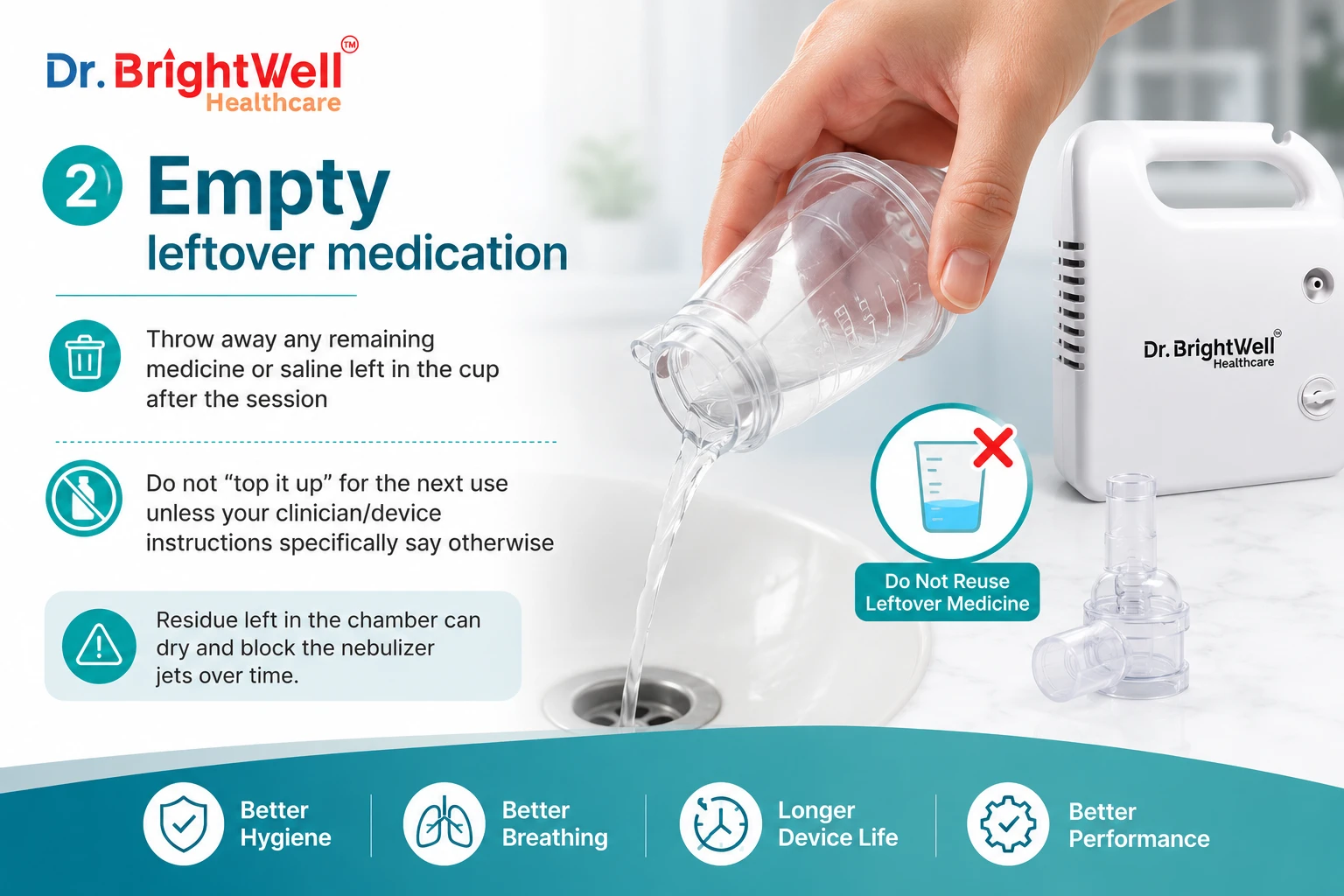
2) Empty leftover medication
- Throw away any remaining medicine or saline left in the cup after the session
- Do not “top it up” for the next use unless your clinician/device instructions specifically say otherwise
Residue left in the chamber can dry and block the nebulizer jets over time. (University Hospital Southampton)
3) Wash the reusable cup/mask/mouthpiece
Use:
- warm water + mild dish soap (if your manual allows soap washing), or
- the exact cleaning method recommended in your nebulizer’s instruction manual
Then:
- rinse thoroughly with clean water
- shake off excess water
- place parts on a clean dry surface/towel to air-dry fully
This “wash-rinse-air-dry” routine after use is one of the most consistent recommendations across respiratory-care guides. (Lung Association)
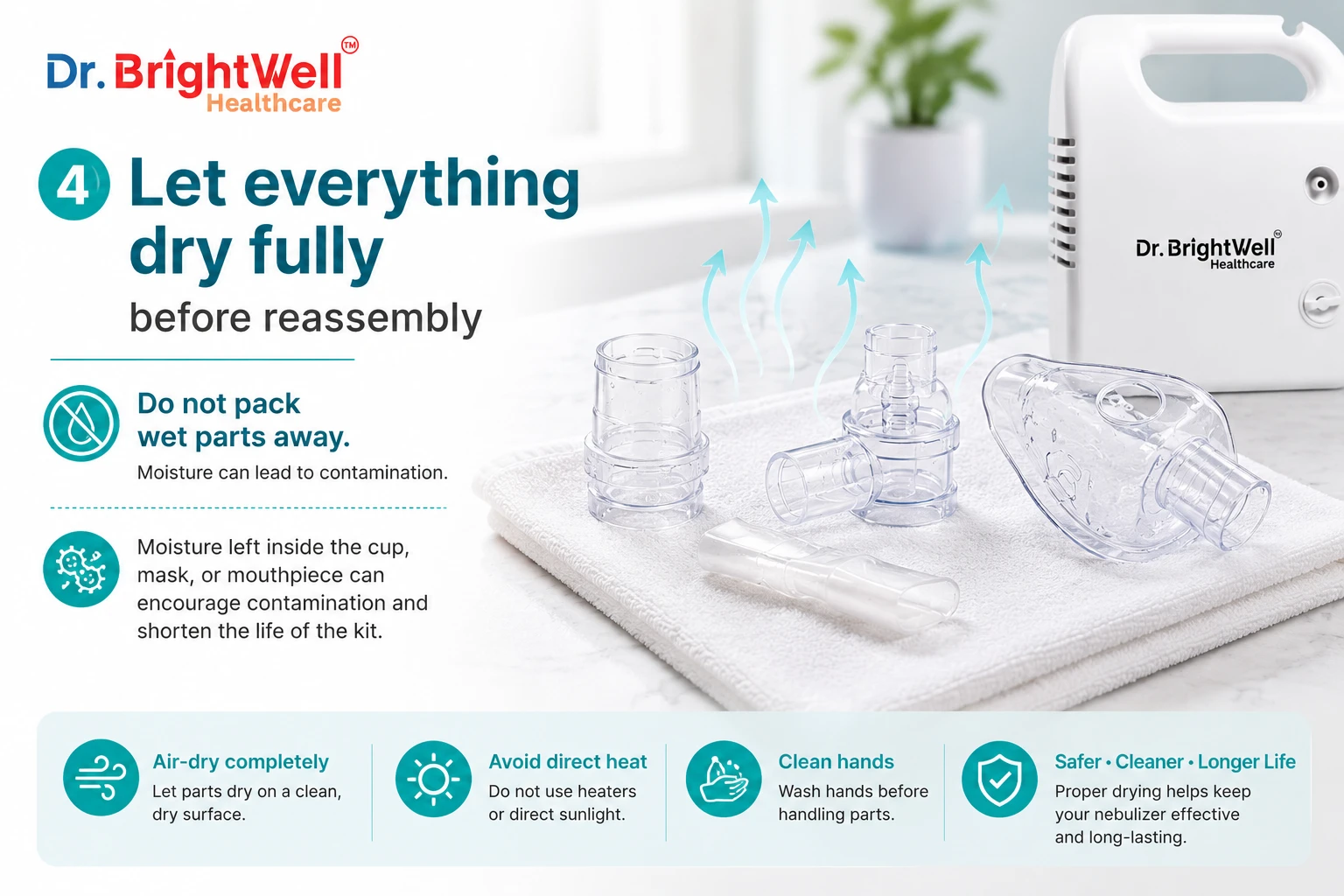
4) Let everything dry fully before reassembly
Do not pack wet parts away.
Moisture left inside the cup, mask, or mouthpiece can encourage contamination and shorten the life of the kit. (University Hospital Southampton)
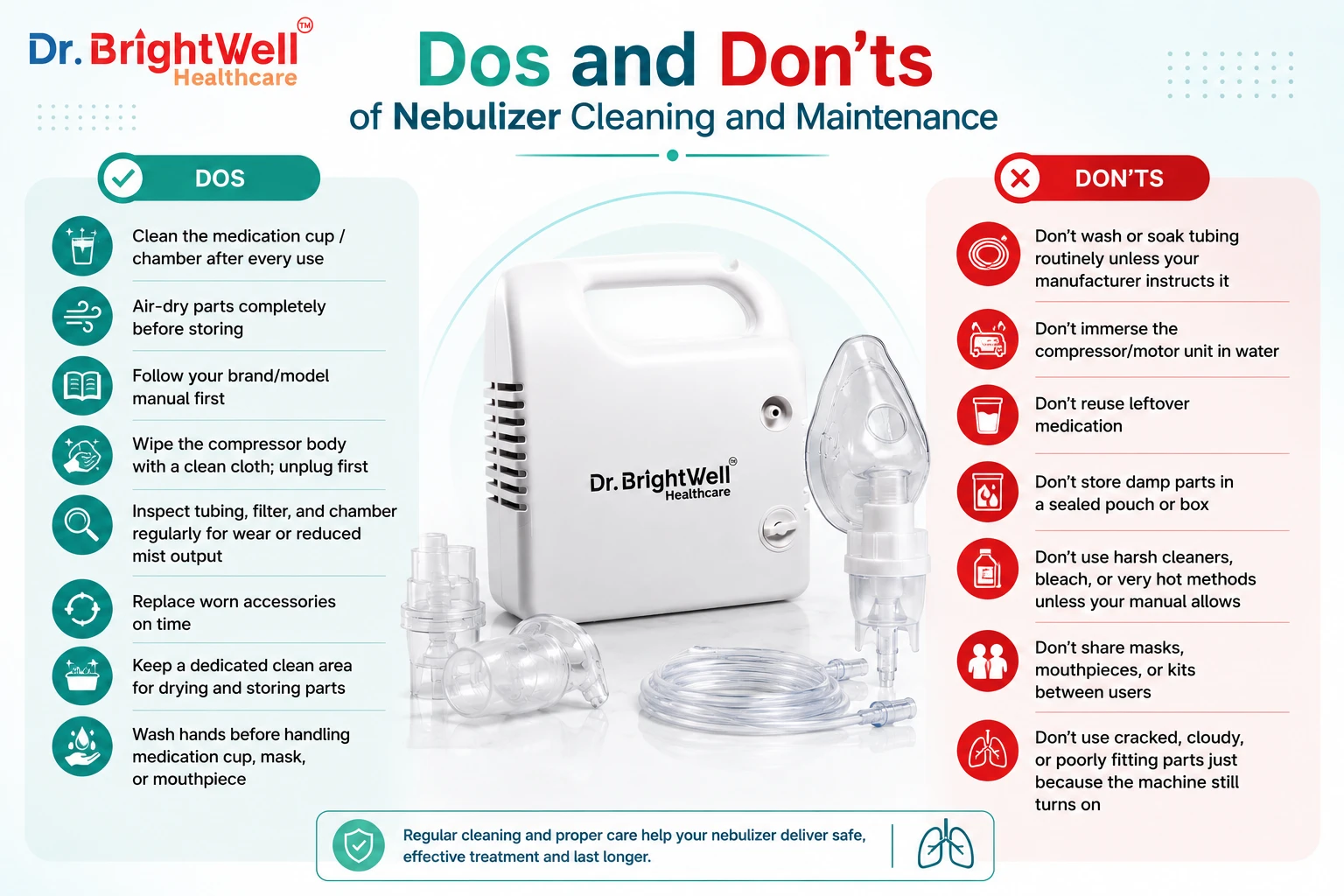
Dos and Don’ts of Nebulizer Cleaning and Maintenance
Dos
- Do clean the medication cup / chamber after every use
- Do air-dry parts completely before storing
- Do follow your brand/model manual first if it differs from general advice
- Do wipe the compressor body with a clean cloth; unplug first
- Do inspect the tubing, filter, and chamber regularly for moisture, discoloration, cracks, stiffness, or reduced mist output
- Do replace worn accessories on time
- Do keep one dedicated clean area for drying and storing nebulizer parts
- Do wash hands before handling medication cup, mask, or mouthpiece
Don’ts
- Don’t wash or soak tubing routinely unless your manufacturer specifically instructs it
- Don’t immerse the compressor/motor unit in water
- Don’t reuse leftover medication from the previous session
- Don’t store damp parts in a sealed pouch or box
- Don’t use harsh cleaners, bleach, or very hot methods unless your device manual explicitly allows them
- Don’t share masks, mouthpieces, or nebulizer kits between users
- Don’t keep using cracked, cloudy, or poorly fitting parts just because the machine still turns on
Guidance compiled from respiratory patient leaflets and lung-health resources. (Lung Association)
Weekly / Periodic Deep Cleaning Checklist
Important: Deep-cleaning method depends on the brand and kit material. Always check your nebulizer manual first.
A practical maintenance routine
After each use
- Wash chamber/cup
- Wash mouthpiece or mask
- Rinse and air-dry
Weekly or as instructed by the manufacturer
- Deep-clean / disinfect reusable nebulizer parts
- Check air filter condition
- Inspect tubing for trapped moisture, stiffness, or discoloration
- Clean the outside of the compressor
Common deep-cleaning method seen in patient resources
Some guides recommend soaking certain reusable parts (not the compressor, and usually not the tubing) in a vinegar-water solution for a set time, then rinsing and air-drying. The exact ratio and soak time vary by guide/device, so it’s safest to follow your manufacturer’s instructions or your clinician’s written advice rather than using one universal formula. (Lung Association)
Long-Term Nebulizer Maintenance Tips
1) Replace consumable parts before performance drops
Depending on your device and usage frequency, the parts that may need periodic replacement include:
- nebulizer chamber / medicine cup
- mouthpiece
- mask
- tubing
- air filter
2) Watch for signs your kit needs replacement
Replace sooner if you notice:
- reduced mist output
- treatment taking much longer than usual
- visible cracks or loose fittings
- stubborn residue or staining that doesn’t clear
- moisture trapped in tubing
- filter looking dirty, discolored, or clogged
3) Keep the compressor dust-free
- unplug before cleaning
- wipe the outside with a soft cloth
- keep air vents unobstructed
- don’t place the machine on dusty bedding or under heavy fabric while running
4) Store it dry and assembled only when fully dry
Best practice:
- cool, clean, dry area
- avoid humid bathrooms if possible
- keep accessories together in a clean container once dry
5) Keep the instruction manual handy
Nebulizer cleaning advice is not identical across all brands. Compressor nebulizers, mesh nebulizers, and some pediatric kits can have different part-care rules.
People Also Ask
1) Do I need to clean my nebulizer after every use?
Yes—at least the medication-side parts. Most guides recommend cleaning the medicine cup/chamber and mouthpiece or mask after every treatment to remove medicine residue and reduce germ buildup. The tubing and compressor are handled differently and usually should not be washed like the cup. (Lung Association)
Short answer for the blog:
- Clean after every use: cup/chamber + mouthpiece/mask
- Do not routinely wash: compressor and tubing unless your manual says to
2) Can you use a nebulizer long term?
A nebulizer machine can be used long term if your doctor has prescribed ongoing nebulized treatment and the device is maintained properly. The bigger issue is not the machine “lasting forever,” but whether:
- the prescribed medication plan is still appropriate, and
- the consumable parts are being cleaned and replaced on schedule
For long-term users, maintenance matters more because repeated use increases the risk of residue buildup, reduced mist efficiency, and hygiene issues if cleaning slips.
Good blog takeaway:
Long-term nebulizer use is common in chronic respiratory care, but the kit, filter, and accessories need routine upkeep.
3) How to clean and sterilize nebulizer parts?
A safe general framework is:
After each use
- take apart the chamber/cup and mouthpiece/mask
- wash in warm soapy water if allowed by your manual
- rinse well
- air-dry completely
For periodic disinfection / sterilization
- use only the method recommended by the manufacturer or your care team
- some reusable kits are disinfected using a vinegar-water soak; others may have different instructions
- do not assume boiling, microwaving, or chemical soaking is safe for every nebulizer part
Sources show broad agreement on routine washing, but sterilization methods vary by device and kit material. (Lung Association)
4) How often should I change my nebulizer tubing?
There is no single universal timeline for every nebulizer because replacement schedules vary by:
- brand/model
- how often the nebulizer is used
- whether the tubing is reusable or considered a kit accessory
- visible wear, trapped moisture, or reduced performance
What’s safer to say:
- follow the replacement schedule in your device manual or supplier guidance
- replace earlier if tubing becomes discolored, cracked, stiff, contaminated, or damp inside
Some hospital leaflets and home-care kits also replace masks/chambers/tubing on a scheduled basis, but those schedules are not identical across devices. (Cambridge University Hospitals)
5) How to clean nebulizer parts without vinegar?
You do not need vinegar for the basic day-to-day cleaning step.
For routine cleaning:
- wash reusable cup/mask/mouthpiece with warm water and mild soap if allowed
- rinse thoroughly
- air-dry fully
If you need disinfection but don’t want to use vinegar, the right alternative is whatever your nebulizer manufacturer specifically approves for that model—not a generic household substitute. Avoid improvising with harsh cleaners.
Simple answer:
For regular cleaning, soap + water is usually the starting point. For disinfection, follow the device manual.
6) How do I sterilize my nebulizer?
The safest answer is: use the sterilization/disinfection method recommended in your nebulizer’s instruction manual or by your clinician.
Why this matters:
- some parts tolerate one method, others don’t
- tubing, mask, chamber, baffles, and mesh components may have different care rules
- an incorrect method can warp parts or reduce nebulizer performance
Safe rule of thumb
- Routine cleaning: after every use
- Periodic disinfection/sterilization: only by an approved method for your model
- Compressor: wipe exterior only; never immerse
Quick Maintenance Summary Table
| Task | What to clean/check | Typical frequency |
|---|
| Post-use rinse/wash | Chamber/cup, mouthpiece or mask | After every use |
| Full drying | All washed reusable parts | After every wash |
| Compressor wipe-down | Exterior only | Regularly / as needed |
| Deep clean / disinfect | Reusable nebulizer parts per manual | Weekly or as instructed |
| Filter check | Air filter | Regularly |
| Kit replacement check | Chamber, mask, mouthpiece, tubing | As per manual / sooner if worn |
Conclusion
A nebulizer usually lasts longer and works more reliably when you keep the routine simple:
- Clean the chamber + mask/mouthpiece after every use
- Air-dry everything completely
- Do not soak the compressor or casually wash the tubing
- Use only manufacturer-approved disinfection methods
- Replace worn parts before mist output drops
That’s the practical balance between hygiene, performance, and device life.
External references used in this draft
If you want, I can do the next production-ready step and turn this into a full WordPress publishing pack with:
- clean HTML-ready blog formatting
- FAQ schema block
- RankMath SEO title + meta + focus keyword
- image carousel placement notes
- CTA/product plugin slots for Dr.Brightwell nebulizers
- downloadable PDF version of the checklist content