No products in the cart.
No products in the cart.
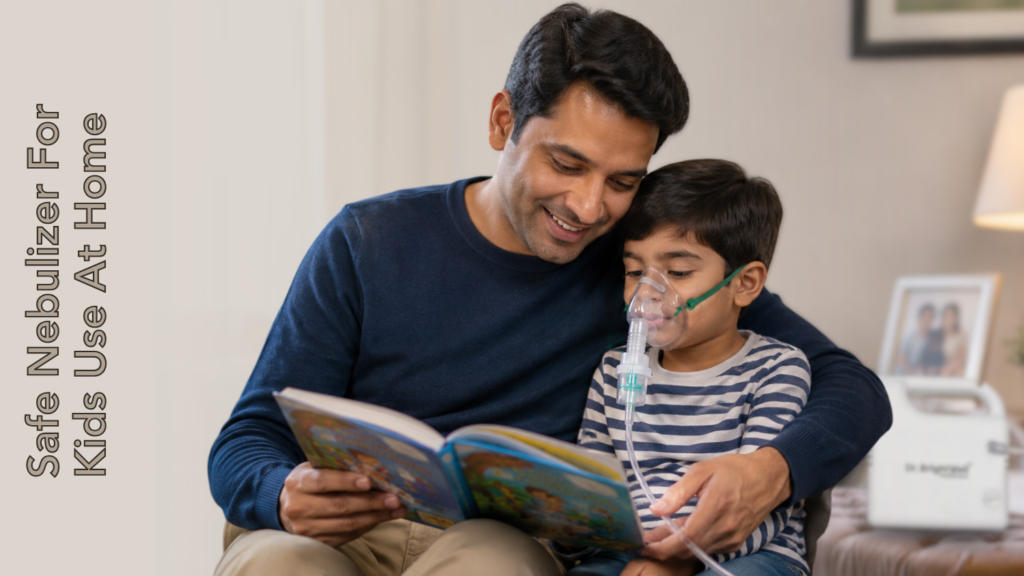
If your child has wheezing, asthma, or recurring breathing discomfort, knowing how to use nebulizer for kids correctly can make home treatment safer and more effective. A nebulizer helps deliver prescribed medicine as a fine mist, making it easier for children to inhale respiratory medication comfortably.
A nebulizer can be a helpful device for children who struggle with inhalers, especially younger kids who need medicine delivered in a gentle mist they can breathe in normally. But using it correctly matters just as much as having one.
In this guide, we’ll explain how to use nebulizer for kids, when it may help with cough or asthma, how to clean it properly, and what safety mistakes parents should avoid.
A nebulizer is a machine that turns liquid medicine into a fine mist so your child can inhale it into the lungs through a mask or mouthpiece. It is commonly used in child asthma home care and in some cases of wheezing, bronchitis, or doctor-prescribed respiratory treatment.
For children, nebulizers are often useful because they do not require the same coordination as an inhaler. Your child simply needs to sit upright and breathe in the mist for several minutes.
Doctors may prescribe nebulizer therapy for children who have:
It’s important to understand one thing early: a nebulizer is not a general home remedy for every cough. It should only be used with medicine prescribed by your child’s doctor, especially for asthma rescue treatment. Pediatric guidance warns against using a nebulizer at home for asthma without medical supervision because it can delay urgent care when a child’s breathing is getting worse. (HealthyChildren.org)
Parents often associate nebulizers only with asthma, but doctors may also prescribe them in other respiratory situations. A nebulizer may be advised when your child:
That said, if your child has a simple cough from throat irritation or a common cold, a nebulizer is not automatically needed. The right treatment depends on the cause of the cough, whether there is wheezing, airway tightening, mucus build-up, or an underlying condition such as asthma. (Healthline)
If you’ve been prescribed one and are wondering how to use nebulizer for kids at home, follow this child-friendly routine.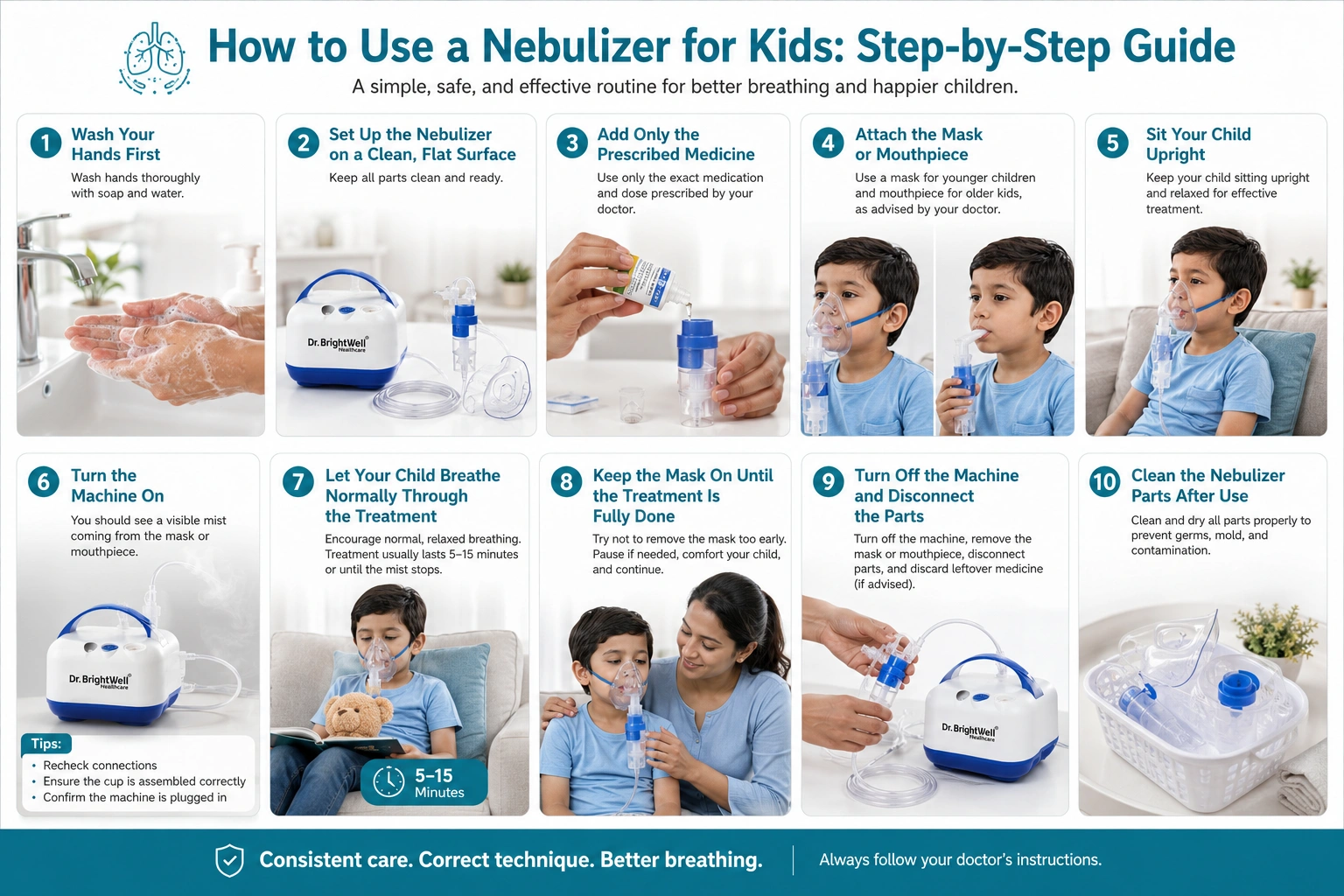
Before touching the medicine cup, mask, or tubing, wash your hands thoroughly with soap and water. This reduces the risk of germs entering the equipment.
Place the nebulizer compressor on a stable surface near a power source. Keep all parts clean and ready:
Make sure the tubing is connected properly and the machine is dry and clean.
Open the medicine cup and add only the exact medication and dose prescribed by your child’s doctor. Never mix medicines or add anything extra unless your pediatrician has specifically told you to do so.
Common nebulizer medications may include bronchodilators or inhaled steroids, but the correct medicine depends on your child’s diagnosis. (WebMD)
For younger children, a face mask is usually easier and more effective. Older children may be able to use a mouthpiece if instructed by the doctor.
A proper fit matters because leaks can reduce how much medicine reaches the lungs. Pediatric guidance commonly recommends masks for younger children and mouthpieces for older kids who can cooperate well. (Nationwide Children’s Hospital)
This is one of the most important parts of child asthma home care. Your child should be sitting upright on a chair, bed, or your lap with their back supported. Slouching can make the treatment less effective.
Try to keep them calm and comfortable. A cartoon, storybook, toy, or quiet music can help them stay still.
Once everything is connected, switch the nebulizer on. You should see a visible mist coming from the mask or mouthpiece.
If you do not see mist:
Now comes the main part of how to use nebulizer for kids: your child simply breathes in and out normally while the mist is delivered.
You do not need to force deep breaths unless your doctor specifically advised that technique. In most cases, normal relaxed breathing while sitting upright is enough.
A treatment usually lasts 5 to 15 minutes, depending on the machine and medicine. It is generally finished when the mist slows down and the cup becomes empty or starts sputtering. (WebMD)
Try not to remove the mask too early. If your child cries, turns away often, or keeps taking the mask off, less medicine may reach the lungs.
If needed, pause briefly, comfort your child, and continue once they settle.
Once the treatment is complete:
This step is often overlooked, but it is essential. Moist nebulizer parts can become a place for germs, mold, and contamination if not cleaned and dried properly. (WebMD)
Knowing how to use nebulizer for kids is one thing. Getting a child to actually cooperate is another. Here are practical ways to make the process easier:
Use treatment time for:
Children tolerate nebulizers better when they are distracted and not afraid of the sound.
If your child is nervous, let them touch the mask, see the machine, and watch the mist before placing it on the face. A gradual introduction can reduce fear.
A mask that is too large or too loose may leak mist and reduce effectiveness. It can also make the child more uncomfortable.
The mask may not fit well, breathing may be irregular, and you may not be able to monitor how well the child is tolerating the treatment.
Never leave a child alone with a running nebulizer.
When talking about how to use nebulizer for kids, safety is just as important as the steps.
Do not use leftover medicine from another family member or repeat old prescriptions without checking with your child’s doctor.
A nebulizer can help deliver medicine, but it is not a replacement for urgent medical attention if your child’s breathing is worsening.
Some nebulized medicines can cause:
If your child develops a rash, worsening breathing, severe discomfort, or unusual symptoms after treatment, contact a doctor promptly. (Drugs.com)
This is especially important in children. Rescue asthma treatment with nebulized medication should be guided by a qualified doctor or specialist, not started casually at home based on internet advice or old prescriptions. (GOV.UK)
A dirty nebulizer can expose your child to germs and may also reduce the machine’s performance. Cleaning is one of the most important parts of child asthma home care.
Wash the medicine cup and mask or mouthpiece according to the device instructions.
A common routine is:
Many nebulizer tubing sets should not be immersed in water. Always check the instructions for your specific model.
Some nebulizers require periodic disinfection depending on frequency of use and manufacturer instructions. Follow the user manual carefully rather than using random home methods.
The key goal is simple: clean, dry, and store the nebulizer properly after every use. (WebMD)
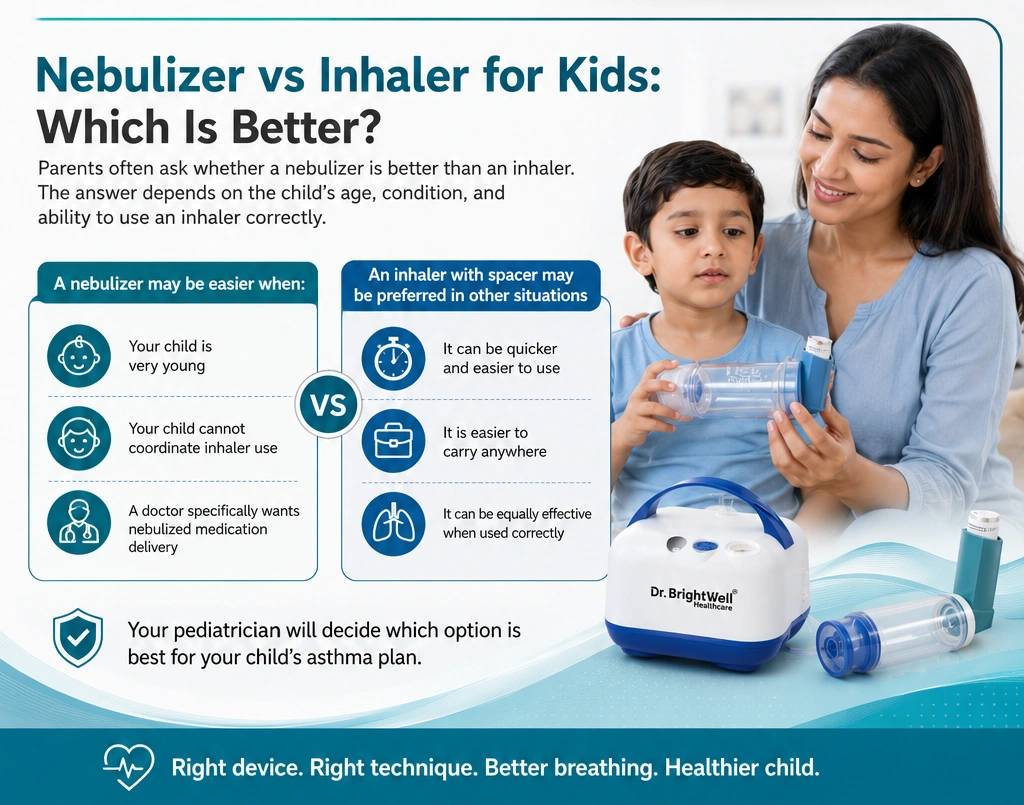
Parents often ask whether a nebulizer is better than an inhaler. The answer depends on the child’s age, condition, and ability to use an inhaler correctly.
A nebulizer may be easier when:
An inhaler with spacer may be preferred in other situations because it can be quicker, easier to carry, and equally effective when used correctly. Your pediatrician will decide which option is best for your child’s asthma plan. (HealthyChildren.org)
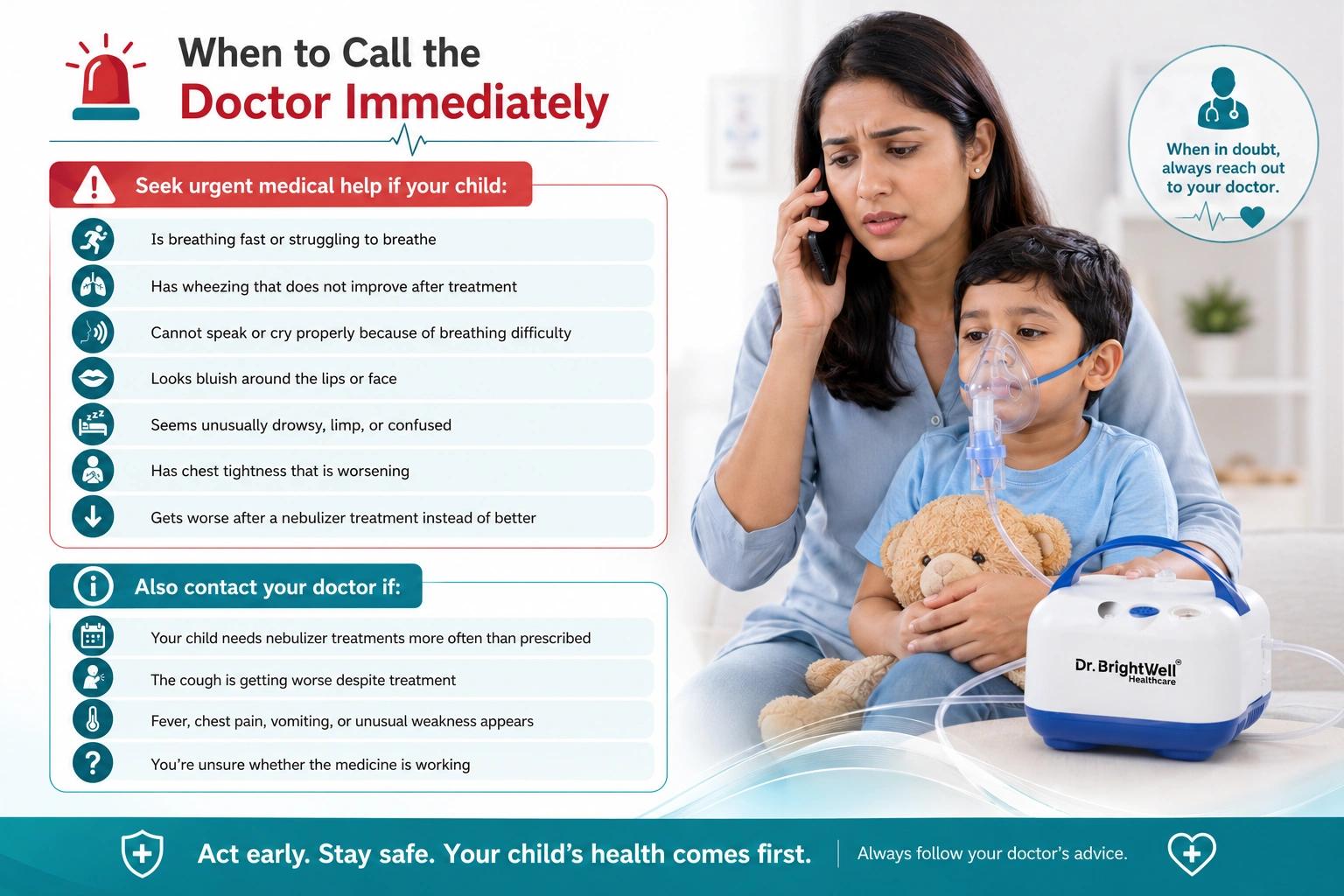
Seek urgent medical help if your child:
Also contact your doctor if:
If your child’s doctor has recommended home nebulization, choosing a reliable, easy-to-clean nebulizer matters. Parents usually do best with a model that offers:
For families managing regular breathing treatments at home, a dependable nebulizer can make child asthma home care much easier—especially when treatment has to happen during cough episodes, seasonal flare-ups, or recurring wheezing under medical advice.
If your child’s doctor has recommended home nebulizer use, it helps to look for a device that is easy to operate, compatible with child masks, and simple to maintain between sessions. A reliable home nebulizer can support smoother breathing care routines during asthma management or doctor-guided respiratory treatment. Dr.Brightwell nebulizer solutions are designed with these everyday caregiver needs in mind, balancing ease of use, cleaning convenience, and dependable mist delivery for home care settings.
Learning how to use nebulizer for kids can feel intimidating at first, especially when your child is coughing, cranky, or scared of the machine. The good news is that once you understand the routine, nebulizer treatment becomes much more manageable.
The key things to remember are simple:
When used correctly, a nebulizer can be a valuable part of child asthma home care, helping parents deliver prescribed respiratory treatment safely at home.