No products in the cart.
No products in the cart.
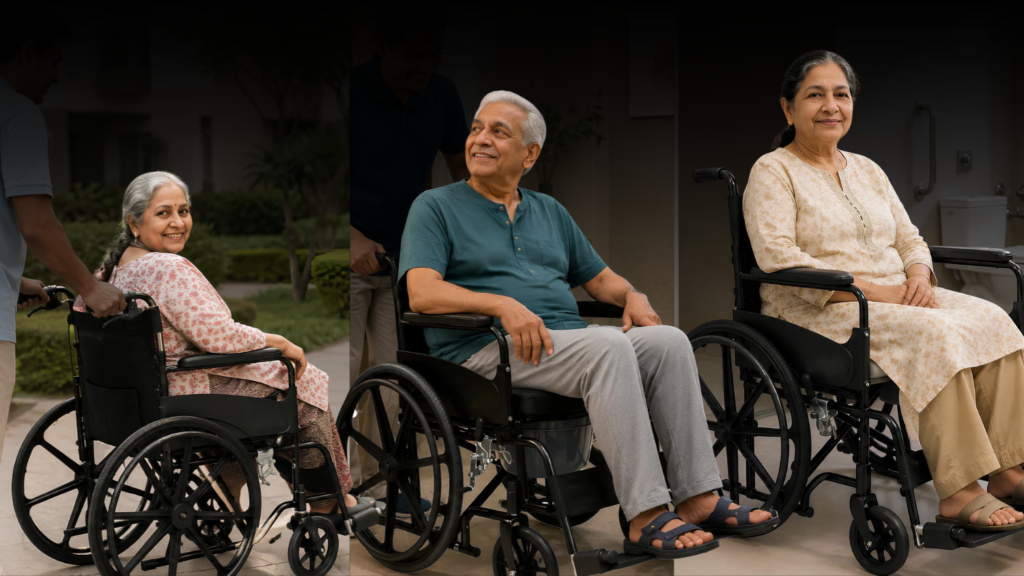
Choosing the right wheelchair for an elderly person is not just about mobility—it is about comfort, safety, ease of caregiving, and day-to-day independence. The best wheelchair for seniors depends on how it will be used: indoor movement, outdoor travel, long sitting hours, post-surgery recovery, or added toileting support.
In India, most elderly buyers typically compare foldable wheelchairs, reclining wheelchairs, transit chairs, and commode wheelchairs. The ideal option should balance comfort, seat width, weight capacity, portability, and maintenance needs without overspending on features that may not be useful.
This guide simplifies what to look for, how much to spend, and which wheelchair type makes sense for different elderly care needs.
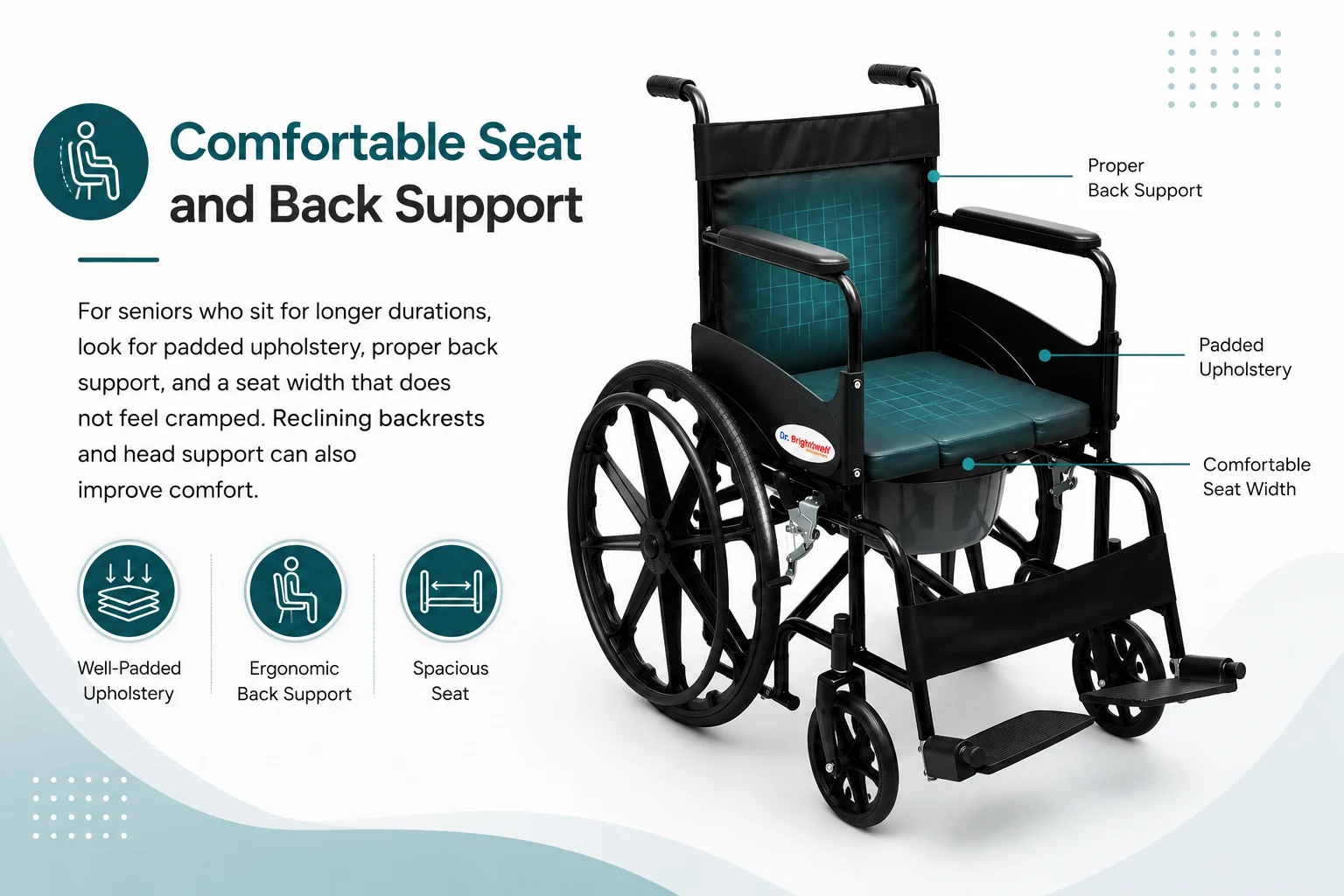 For seniors who sit for longer durations, look for padded upholstery, proper back support, and a seat width that does not feel cramped. Reclining backrests and head support can also improve comfort.
A foldable wheelchair is easier to store, load into a car, and move around in apartments or hospitals. This matters a lot for family caregivers.
If the elderly user has weakness, fatigue, spinal discomfort, or spends many hours in the chair, a reclining wheelchair can reduce strain and help with repositioning.
These make transfers easier—from wheelchair to bed, sofa, or car seat. Elevating footrests can also help users with swelling, knee issues, or recovery needs.
Always check both:
A chair that is too heavy can become difficult for caregivers to manage.
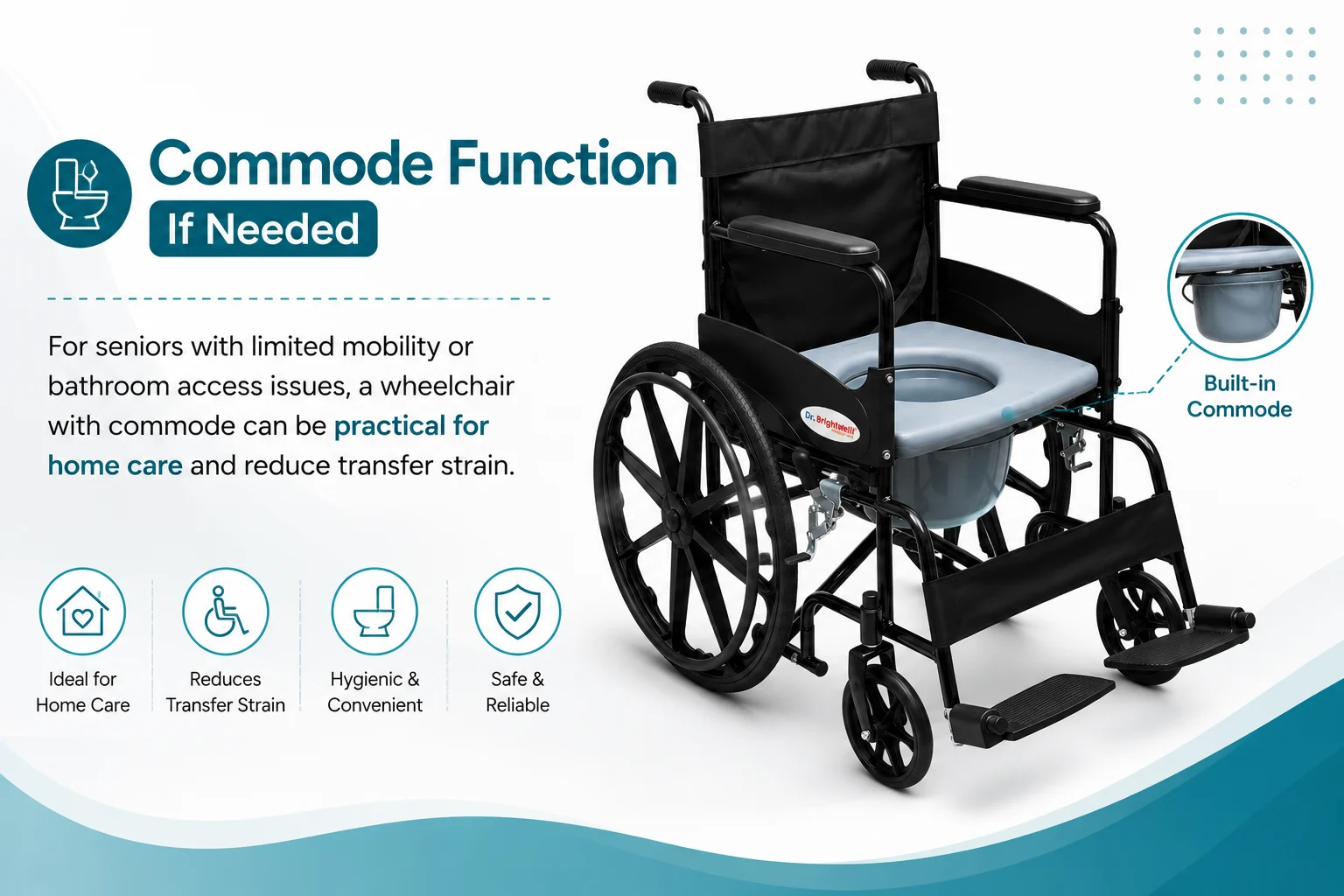 For seniors with limited mobility or bathroom access issues, a wheelchair with commode can be practical for home care and reduce transfer strain.
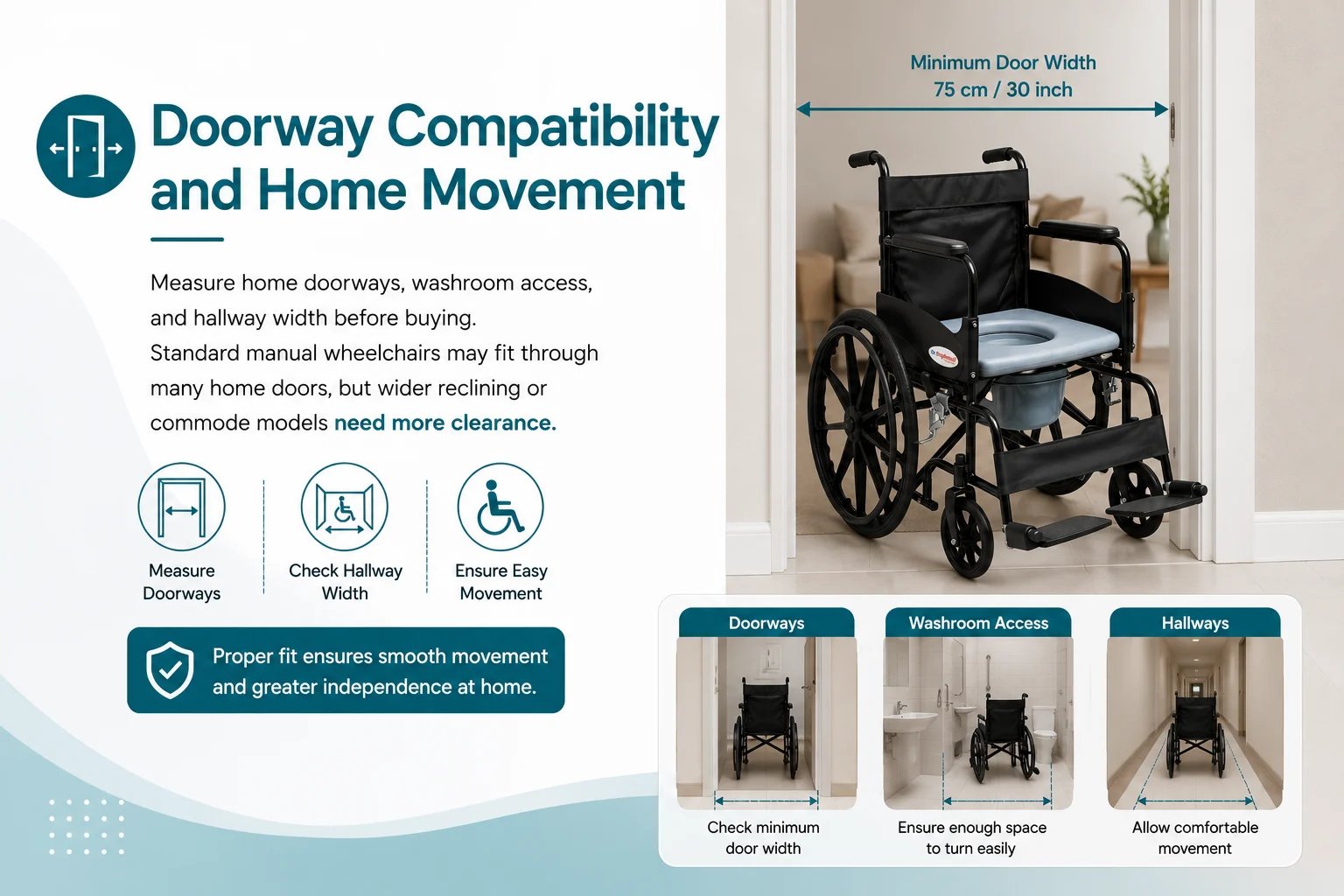 Measure home doorways, washroom access, and hallway width before buying. Standard manual wheelchairs may fit through many home doors, but wider reclining or commode models need more clearance.
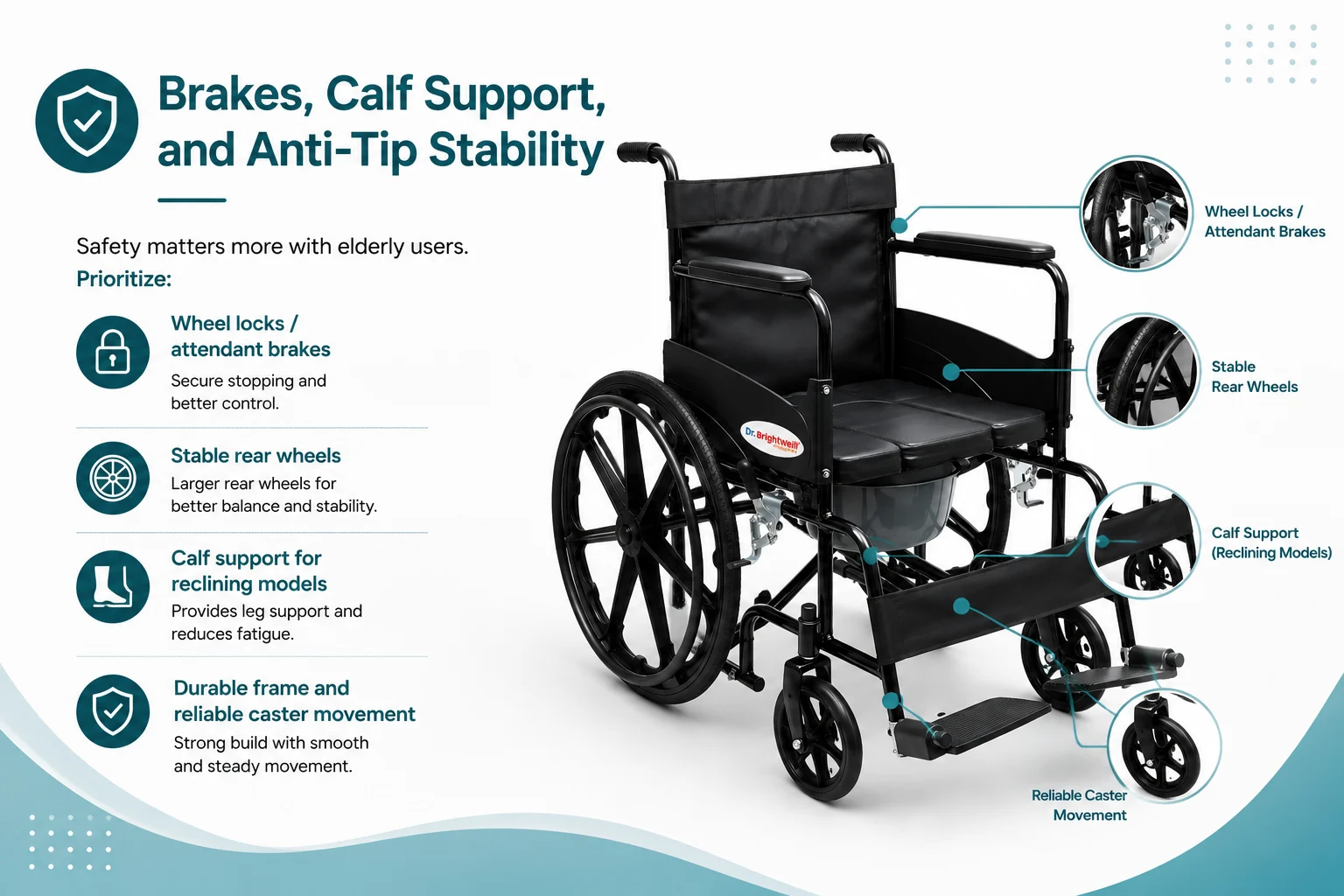 Safety matters more with elderly users. Prioritize:
| Budget Range | Best For | Typical Features You Can Expect |
|---|---|---|
| ₹6,000 – ₹10,000 | Basic home use, short sitting duration, budget buyers | Foldable manual wheelchair, basic padded seat, fixed armrests/footrests, standard frame, simple attendant use |
| ₹10,000 – ₹18,000 | Daily home use, elderly users needing better comfort and transfer convenience | Better cushioning, foldable frame, detachable armrest/footrest options, stronger wheels, improved build quality, some commode variants |
| ₹18,000 – ₹30,000+ | Long sitting hours, high-dependency care, post-surgery, advanced comfort needs | Reclining backrest, headrest, elevated footrests, commode support, detachable parts, wider seat, better positioning support |
Price context from current India listings: reclining and commode wheelchairs from brands such as Karma and KosmoCare are commonly listed in the roughly ₹15,000–₹19,000+ range, while premium reclining variants can go higher depending on configuration and seller.